TRAVEL NOTES / NO. 041
THURSDAY, SEPTEMBER 24, 2026
Travel Stories · 5 MIN READ125
Outside the photo booth, strangers line up shoulder to shoulder
In the queue outside a downtown photo booth, a small look at why one printed frame holds a trip's memory differently than a phone full of photos
By Find to Send Editorial
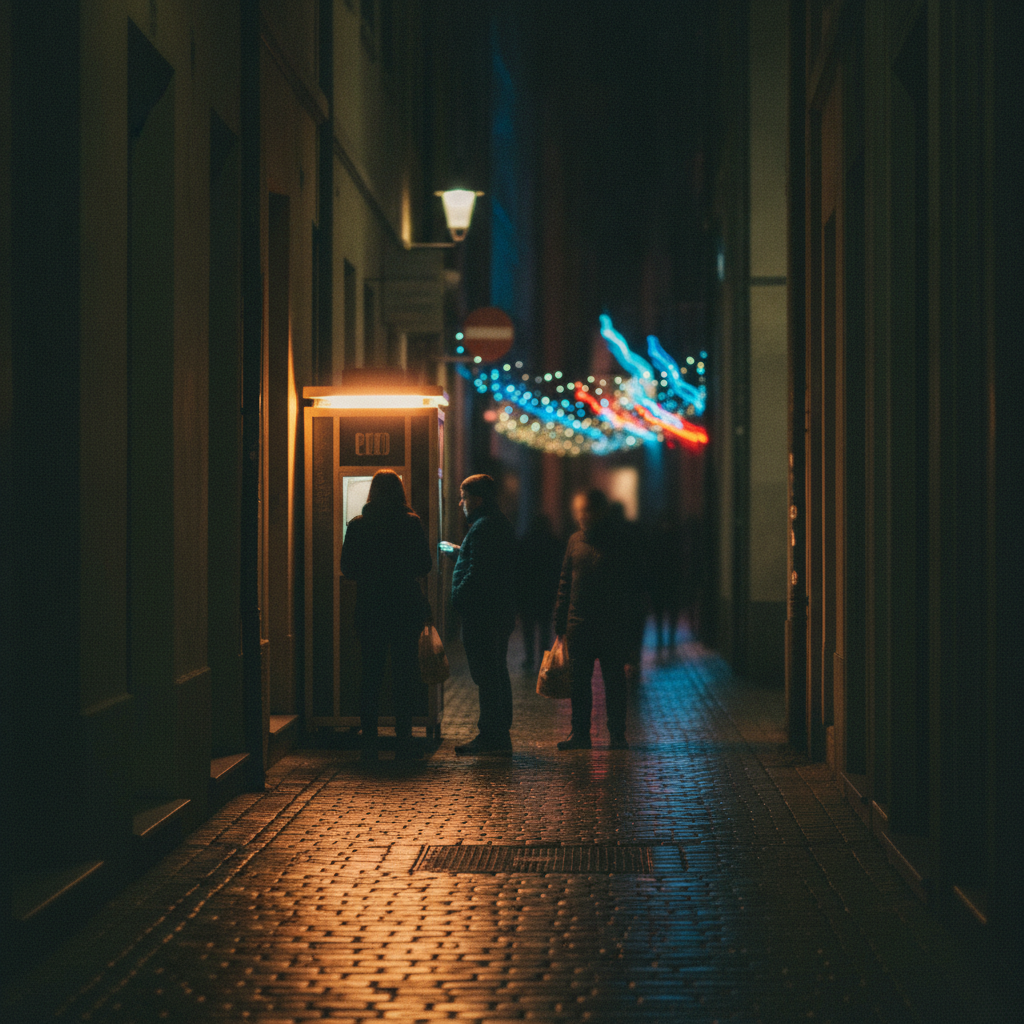
It is past ten at night in a downtown alley, and a line has formed beneath a neon sign. The person up front is on the phone speaking English, behind them a Korean couple trades quiet jokes, and a little further back a solo traveler checks their phone while gauging how long the wait might be. What everyone is holding onto is nothing much at all — just the anticipation of a single small booth, and the one photo that will come out of it.
It is a strange thing, really. Everyone's phone already holds dozens of photos from that same day, saved instantly, shareable in seconds. Yet here they stand, in a narrow alley, letting five or ten minutes slip by for a strip of printed paper. That one question — why wait for something a phone already does faster — is what makes the scene worth a second look.
The line holds more variety than it first appears. Laughter spills out from inside the booth, and each time the curtain parts, the next person shuffles half a step forward. Someone rifles through a box of props for glasses or a headband; another pair simply rests a hand on the other's shoulder and looks toward the lens. A small screen beside the booth shows a preview of the four frames just taken, and the fingers swiping through it carry a mix of excitement and mild embarrassment.
Conversation drifts through the wait. A foreign traveler and a local traveler, sharing no common language, find themselves in the same small predicament for a few minutes. Someone laughs at the sight of another person agonizing over what caption to scrawl on the printed strip, and that laugh passes down the line. This booth in this alley is less a place to take a photo than a place that briefly lines up strangers, side by side, for no particular reason.
The difficulty here is not trivial. For a traveler, a photo booth is appealing but a little bewildering. The screen inside is almost always in Korean, and there is a sequence to follow — choosing a filter, fitting the right number of people into frame, working through payment — that feels unfamiliar in the moment. Standing in line, a quiet worry builds: will I fumble when it's my turn. Watching a session that should take five minutes stretch to ten or fifteen because of props and poses only sharpens that unease — the people behind grow restless, and the people ahead rush.
Most booths, too, occupy a small footprint with only one or two units, so during the evening rush the line can spill well out into the alley. For a traveler on a tight schedule, this wait itself becomes a cost. The thought of spending twenty minutes for one photo strip competes, right there in line, with the sense that this is an experience unavailable anywhere else.
Understanding this means first understanding why these booths cluster so densely, alley after alley. A booth-format studio can run on a tiny footprint even in rent-heavy commercial districts, which suits the economics of small independent operators well. Each customer's shooting, printing, and payment takes only minutes, and the fast turnover lets a cramped storefront still generate solid daily revenue — which is exactly why these booths concentrate near busy alley entrances, university districts, and backstreets thick with foot traffic.
The other layer worth understanding is that this is less about photography and more a small ritual of confirming a relationship. A phone can shoot endlessly and delete anything; the strip that comes out of the booth fixes one expression, one mistake, permanently, with no do-over. Because the result is finite, people look at each other and at the lens with a little more seriousness in that brief window. Travelers line up here not for the technology, but for that unrepeatable moment it captures.
So what should a traveler prepare before stepping into that line. First, look over the sample photos and price chart usually posted outside the booth before going in — most places display cut count, size, and price near the entrance, and deciding on a format in advance saves real time once inside. Second, confirm how many people the frame and booth can actually hold, since capacity varies by machine, and a larger group should decide in advance how to split into multiple shots so the line doesn't stall. Third, if the on-screen menu feels unfamiliar, it is fine to ask a nearby customer or staff member for quick help — in areas with heavy tourist traffic, gestures alone often get the job done. Fourth, most machines take both cash and card, but small unmanned booths occasionally have a card reader that misbehaves, so carrying a little cash is a reasonable precaution; if neither works, simply step aside, let the next person go, get cash from a nearby convenience store, and rejoin the line. Fifth, the printed strip usually comes out right away and the ink is still slightly wet, so it helps to hold it by the edges. The whole process typically wraps up in ten to twenty minutes, and even a long line tends to move faster than it looks, given how quickly each booth turns over.
Back in that alley, the line is still long, laughter still leaks from inside the booth, and someone steps out from behind the curtain holding a freshly printed photo, looking pleased. Watching that face, the next person in line relaxes just slightly. What a trip leaves behind may, in the end, be exactly these small moments — not a photo buried somewhere in a phone's gallery, but a small piece of paper carried in a wallet. That night spent standing beside strangers, waiting for one single frame, might turn out to be the scene remembered longest from the whole trip.
Read next
OCT 7, 2026 · Travel Stories
The broth is free before anything else: a small lesson in Seoul's street tents
OCT 4, 2026 · Travel Stories
There's no restaurant in sight, so how does the fried chicken arrive at the Han River
SEP 26, 2026 · Travel Stories