TRAVEL NOTES / NO. 041
THURSDAY, SEPTEMBER 24, 2026
Hotel · 5 MIN READ249
Is the room safe actually safe, or just reassuring
Behind the convenience of a four-digit code lies a quiet gap in liability and mechanical failure worth knowing before you pack your valuables
By Find to Send Editorial
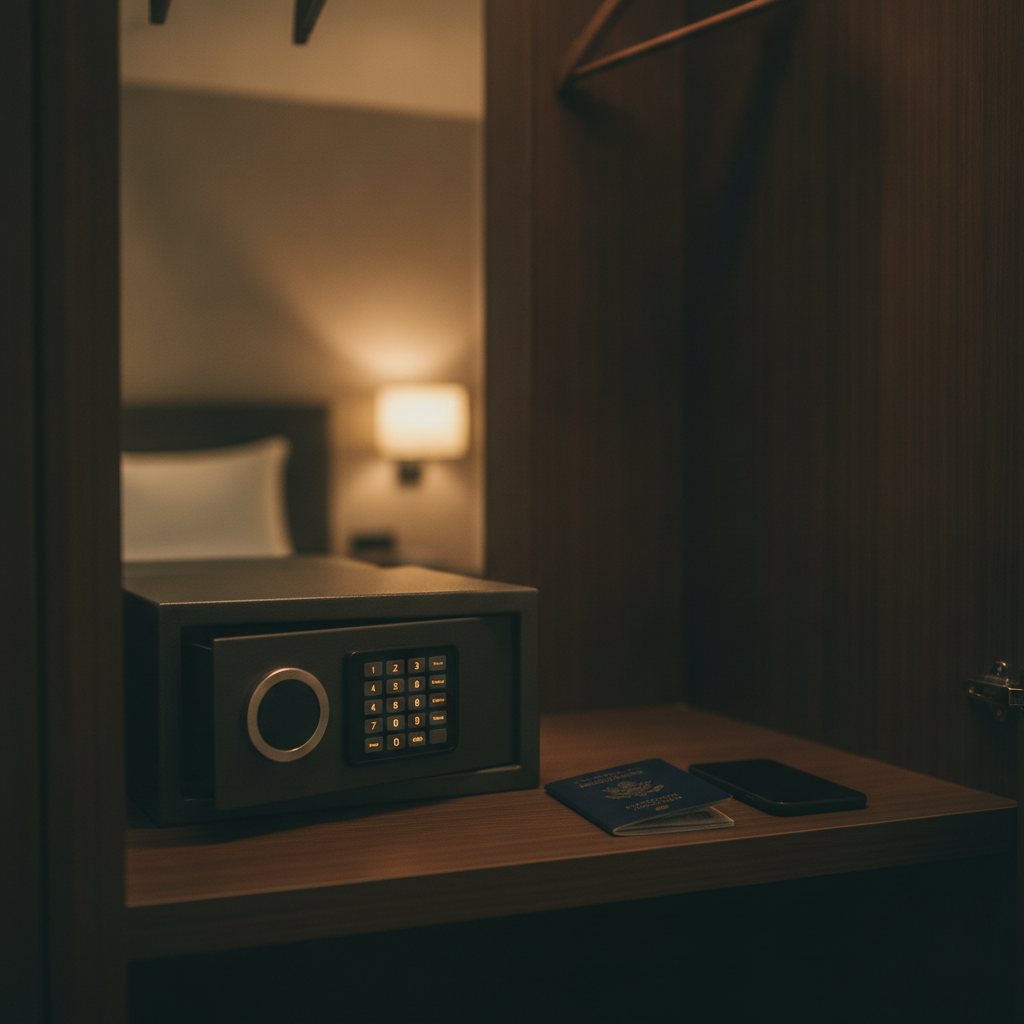
After check-in, the unpacking ritual is always the same. Open the suitcase, hang up the clothes, then push the passport, laptop, and spare cash into the small safe tucked inside the closet. Only after hearing the short mechanical click of the lock, following a four-digit code, does the room finally feel secure enough to leave. But in that moment, has anything actually become safer, or has a feeling of reassurance simply been purchased.
Most travelers never ask this question. The safe seems like a fixture the room is simply supposed to have, and setting a code feels like security itself, completed in a few seconds. The question only becomes real days later, when the door refuses to open, or when something valuable inside turns out to be damaged or missing at checkout.
Picture eight in the evening, returning to the room after a full day out. The closet door swings open, a hand reaches for the keypad, the code is entered — and nothing happens. It is tried again. Still silence. A call to the front desk brings a calm voice promising an engineer, but ten minutes pass, sometimes more, while nothing visibly changes. What remains is the sound of another guest's footsteps waiting for the elevator down the hall, the low hum of the minibar, and the quiet tension of standing in front of a locked box that will not answer.
The problem is not simply that the door will not open. If what is inside is the passport, credit cards, or documents needed for the next leg of a trip, the entire day's schedule can start to wobble. Imagine this happening with a flight departure time closing in — suddenly a small mechanical device becomes the variable that decides whether the rest of the trip runs on time.
The harder part comes after. Even when the safe opens and closes without any trouble, if an expensive watch, jewelry, or a large amount of cash stored inside is lost or damaged, it is unrealistic to expect the hotel to cover the full value. Most hotel terms and conditions specify a liability cap for valuables kept in the room, and that cap is very often far lower than the actual worth of what guests imagine they are protecting.
Understanding why requires seeing the safe and hotel liability as two devices built on entirely different layers. The room safe was designed as a physical barrier against theft, not as a financial guarantee against loss or damage. When a power outage hits or a battery dies, an electronic lock can simply stop responding, and reopening it then requires staff intervention through a master key or reset procedure — a process that takes people and steps, not an instant fix.
Hotel liability, by contrast, is governed separately by law and by the terms of stay. If a hotel were to accept unlimited responsibility for every guest's belongings, the resulting insurance and operating costs would eventually be passed on to every guest through higher room rates. That is why most hotels limit their responsibility for valuables kept in the room, while applying a much stricter standard of care to items deposited separately at the front desk. Front-desk safes or deposit boxes typically issue a receipt, log the item or its weight, and often carry a different level of insurance coverage than the in-room safe. In effect, hotels deliberately separate physical security from legal liability — the two are not the same system at all.
So what should a traveler actually do. First, right after check-in and before placing anything inside, check the instructions and note the code somewhere separate, whether a notes app or a phone memo, since this is not just a precaution against forgetting but a minimal safeguard for when staff need to confirm the original setting during a malfunction. Second, spread out anything whose loss would derail an entire day — a passport copy saved to cloud storage or email in advance, the original kept in the safe, and a portion of cash carried on the body rather than concentrated in one place. Third, for genuinely high-value items like expensive watches, jewelry, or large sums of cash, request the front desk's separate valuables storage service instead of relying on the room safe, confirming the item and its approximate value with staff and keeping the deposit receipt, since that receipt becomes the only real basis for resolving responsibility if something goes wrong later. Fourth, if the safe refuses to open on checkout day, stay calm, contact the front desk immediately to request an engineer, and build in some buffer time in the remaining schedule — most such issues resolve within tens of minutes, though the rare case requiring a part replacement may call for adjusting checkout time, so it is safer to plan slack from the start.
When depositing valuables at the front desk, sealing them in an envelope or a locked pouch makes it easier later to confirm whether the seal was disturbed, reducing the chance of disputes.
Return now to that eight o'clock scene. If the safe will not open but a passport copy already sits in the cloud, and the truly valuable items are already resting at the front desk with a receipt in hand, that brief silence stops being a crisis threatening the whole trip and becomes just a minor inconvenience. The safe offers reassurance, but turning that reassurance into actual safety requires travelers to build one more layer of preparation themselves.
Lost something in Korea?
We help travelers recover items left behind at hotels and other locations in Korea, and send them anywhere in the world.
Find my item