TRAVEL NOTES / NO. 009
THURSDAY, AUGUST 27, 2026
Hotel · 5 MIN READ349
That One Bottle of Water on the Checkout Bill
Minibar items are almost always charged. Checking the bill before you leave the front desk — not after you get home — is the easiest way to fix a mistake.
By Find to Send Editorial
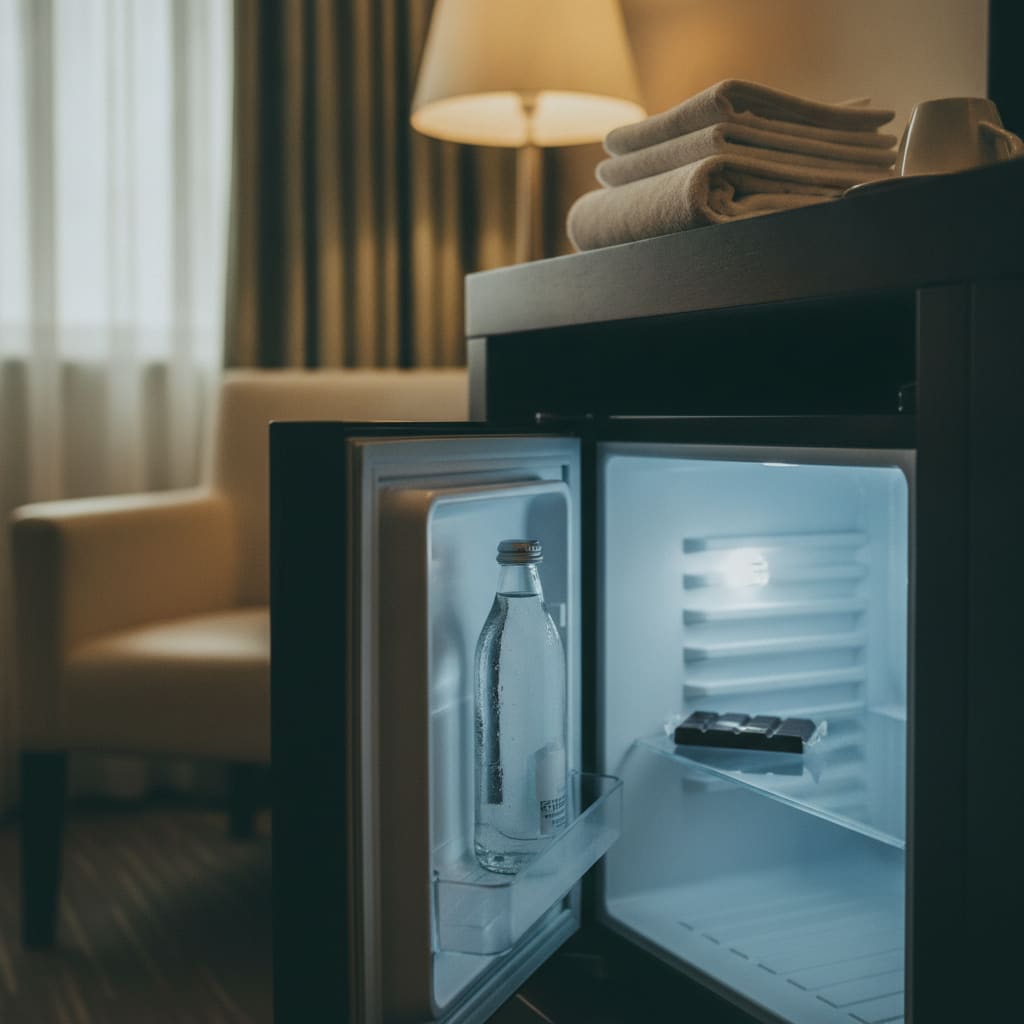
Five minutes before checkout, you zip up your suitcase and, almost as an afterthought, open the minibar fridge one last time. Last night, thirsty after a long flight, you grabbed a bottle of water without thinking, and your child ate half a chocolate bar. It seemed harmless at the time. But the bill the front desk hands you shows an unfamiliar charge next to "room service," and one question surfaces immediately — is this correct, or has something gone wrong.
Most travelers let it slide in this exact moment. With people waiting in line behind them, a checkout deadline looming, and a flight to catch, they simply hand over their card and sign. It is only later, scrolling through a credit card statement at home, that the charge resurfaces and the unease returns.
Look closely at what actually happens at that front desk, in the queue that moves like a slow conveyor belt. The clerk types the room number into the computer, and the printer hums low as it spits out the receipt. During those few seconds of printing, most guests are checking their phone or fidgeting with their suitcase handle, mentally already somewhere else. Even when the receipt is handed over, the eyes usually skim straight to the total.
That bill, meanwhile, bundles far more than the room rate — minibar charges, room service, laundry, breakfast if it was ordered separately. The more line items there are, the more human nature pushes people to check only the total and sign, rather than reading each line.
The real problem is that minibar charges feel unfair more often than people expect. Nearly everything inside that fridge is set up to be charged regardless of the room rate, and this is rarely explained clearly at check-in. A bottle of water, a bag of nuts, a miniature whiskey — these are commonly priced several times higher than a convenience store, and travelers usually only register that gap when they see the checkout bill.
What makes it worse are the accidental cases. Sometimes simply opening the fridge door and closing it again triggers a sensor that logs it as consumed. Sometimes a previous guest's minibar wasn't fully restocked during cleaning, and the missing item gets billed to the next occupant instead. Standing in a checkout line, weighing all these possibilities on the spot is genuinely difficult, which is exactly why so many people sign first and regret it later.
This recurring friction traces back to how hotels actually run their minibar operations. Most hotels treat the minibar as its own small profit center. In some properties, housekeeping staff visually check consumption during daily cleaning and enter it into the system by hand; in newer ones, weight or infrared sensors are installed inside the fridge so that simply lifting an item registers as consumed and sends a charge straight to the front desk system automatically. These automated systems exist to cut labor costs and prevent missed charges, but they are also exactly why picking something up and putting it back can trigger an erroneous charge.
The billing system itself compiles data from several separate departments — room rate, facility fees, minibar, laundry — into a single document at the moment of checkout. Because each department enters its own data independently, there is room for error at every point a human is involved. In other words, a strange minibar charge is not a rare accident but a fairly predictable byproduct of how multi-department billing works. And crucially, this kind of error can be fixed instantly at the checkout counter, but becomes far more complicated once a guest has already left — requiring tracking down the right department, emailing or calling internationally, and waiting much longer for any refund.
So the practical steps are clear.
- The moment you receive the checkout bill, read it line by line rather than glancing only at the total — minibar, room service, laundry, phone charges — and look specifically for anything unfamiliar or that you don't recall consuming.
- If you did use the minibar, recall exactly what you ate or drank and compare it against the listed items and quantities; if you only opened the fridge without removing anything, hold that fact clearly in mind so you can compare it against the bill.
- If something looks off, point to that specific line item and ask the front desk staff about it right there, calmly framing it as "could you confirm exactly what this charge is for" rather than an accusation, which tends to get faster cooperation.
- Staff can usually check housekeeping records or sensor logs on the spot, and if it was indeed an error, the item is typically removed and the bill reissued within a few minutes.
- If the line is too long to resolve immediately, take a copy of the receipt and the front desk's direct contact information so you can follow up later by phone or email — but understand this route can take days or weeks and may require a separate refund process once the card has already been charged, which is why resolving it on the spot is almost always simpler.
Back at that fridge one more time — the frustration was never really about the price of one bottle of water. It was about wanting to know exactly what you are paying for. Spending a few extra seconds reading the bill line by line in that checkout queue is a small habit that leaves the last memory of a trip a little clearer.
Lost something in Korea?
We help travelers recover items left behind at hotels and other locations in Korea, and send them anywhere in the world.
Find my item