TRAVEL NOTES / NO. 007
TUESDAY, AUGUST 25, 2026
Hotel · 5 MIN READ137
You left it behind at checkout — the hotel probably won't call first
The moment you realize your passport case is missing at the gate, here is what actually happens behind the scenes — and how to get it back
By Find to Send Editorial
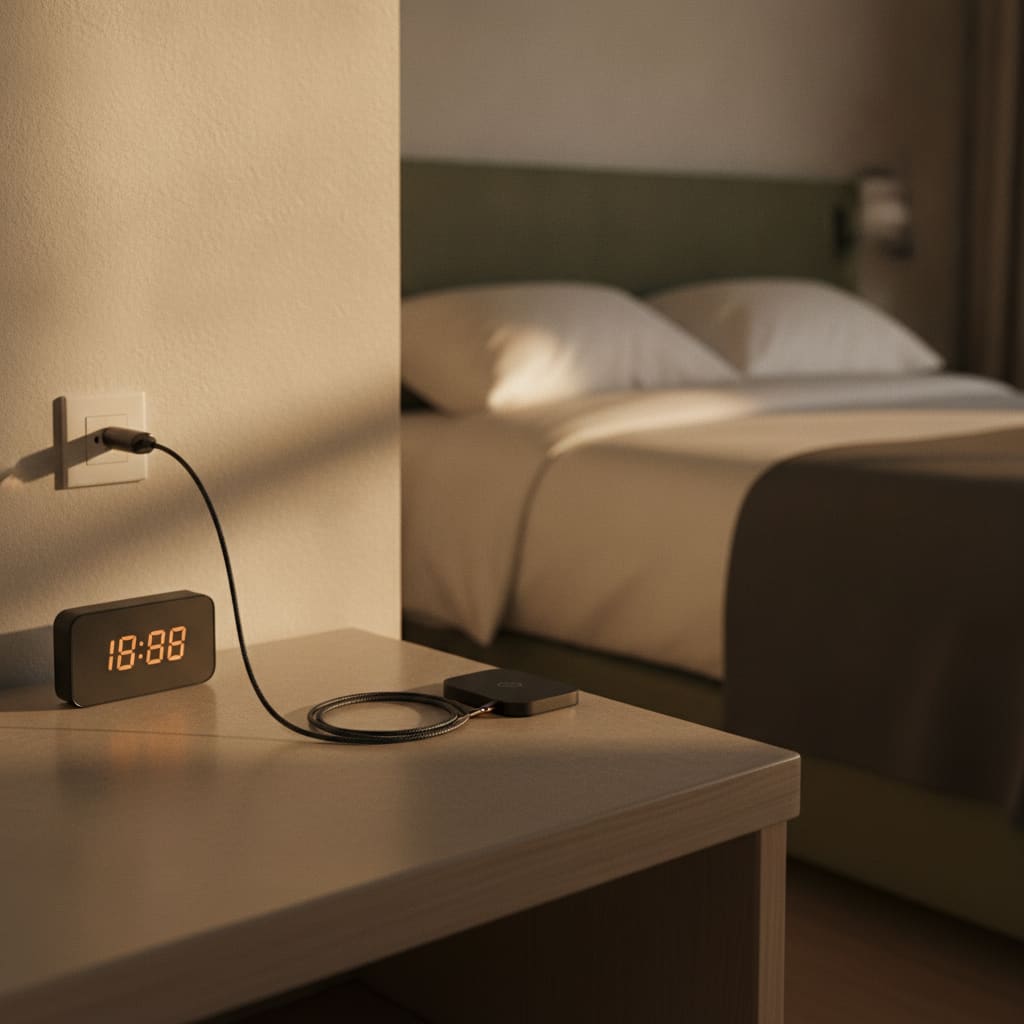
It was around the second boarding announcement at the gate. My hand, digging through the inner pocket of my bag, stopped moving. The passport case was gone. Inside it were not just the passport but two credit cards and a small note. My mind replayed last night in fast motion — check-in, the nightstand beside the bed, a shower, and this morning's rushed checkout. It seemed I'd left it right there on the nightstand and walked out.
What these moments share is the physical distance between the instant you realize the problem and the place where it can actually be solved. The item is sitting in a hotel room you checked out of hours ago, and you're boarding a plane in minutes. You can make a call, but knowing what's actually happening on the other end of that call makes the situation far less disorienting.
Picture the narrow, easy-to-miss space behind a hotel's front desk. The door usually just says 'Housekeeping' or 'Staff Only,' somewhere guests rarely see. Inside, labeled boxes and zip bags line the shelves — chargers, glasses, a single earring, a child's stuffed toy. On the wall hangs a clipboard with a lost-and-found log, handwritten or printed from a spreadsheet, three columns filled in order: room number, date and time found, item description.
Imagine the moment a housekeeper, checking a room, spots the passport case on the nightstand. That hand isn't careless. Sensitive items like passports or cards are moved not into the general lost-and-found box but into a safe or a separate locked drawer. One more line gets added to the log, and the staff member moves to the next room. At that exact moment, the guest is already in a taxi to the airport, or already on the way to the next city.
This is where the real problem begins. The fact that an item has been found is not automatically communicated to the guest. In films, hotels call immediately — 'Sir, you left something behind.' In reality, that call comes far less often than it doesn't. Hotels generate multiple lost items a day, contact details left at booking are sometimes inaccurate, and a new guest may already be occupying that room. It simply falls down the priority list.
This is what makes the waiting psychologically frustrating. The guest assumes 'surely it's there, why hasn't anyone called,' while the hotel never treated calling first as standard procedure to begin with — the wait itself was never going to end that way. And if the hotel is in a country with a language barrier, the very idea of having to make that call becomes its own obstacle: what to say, how to start, whether you'll even reach the right department.
To understand this structure, look at what hotels actually prioritize operationally. Housekeeping's core job is turning rooms over within a set window for the next guest. Lost-and-found handling is a byproduct of that process, not a dedicated full-time function. At most hotels, it's managed by the housekeeping manager or front desk staff alongside their regular duties, and how quickly it moves depends on that day's volume of check-ins and checkouts. Finding an item is only the first step — locating the guest's contact, placing an international call, confirming shipping, packing, and sending all take real time and labor.
That's precisely why so many hotels run this as a guest-initiated process: the hotel will handle logistics, but only once the guest reaches out first. Without that contact, the hotel has no way of knowing whether the item still matters to the guest or has already become irrelevant to them. So most hotels set a defined holding period, after which unclaimed items are donated or discarded — not neglect, but a rational way of keeping limited storage space in rotation.
If you've just realized you left something behind, this is the sequence that actually works.
- Contact the specific property you checked out from as soon as possible — call or email directly, using the front desk number on your booking confirmation or receipt rather than a chain's general hotline, since the property level is far faster.
- When you reach someone, give specifics: room number, check-in and checkout dates, and a clear description of the item (color, brand, exactly where you left it). The closer your description matches what's in the log, the faster confirmation happens.
- Once the item is confirmed, ask whether international shipping is possible. Many hotels will arrange it, but the cost is the guest's responsibility as a rule, and payment method — resubmitting card details, cash on delivery through a courier — needs to be agreed at this stage.
- If calls aren't going through or responses are slow, contact the customer service of the platform you booked through (Booking.com, Airbnb, etc.) to request they follow up with the property, or go through the chain's head-office customer service for an indirect route.
- For sensitive items like a passport, it's likely stored separately, so ask explicitly whether a passport is being held in the safe — routing this through a general lost-and-found inquiry can slow confirmation down.
- Once you get an answer, always confirm the holding period. It varies by hotel, but items can move to donation or disposal after a set window, so if your trip means you're reaching out late, ask about this urgently.
A thirty-second habit — scanning the nightstand, the top of the fridge, and around outlets right before you walk out the door — prevents a large share of these situations for passports and cards in the first place.
Back at the gate, the best thing you can do in that moment is stay calm and know the sequence. The passport case is probably sitting quietly right now, in a labeled box on a shelf in a narrow office behind some hotel's front desk. Just knowing that you're the one who needs to make the call is often enough to make the rest fall into place more simply than it seemed.
Lost something in Korea?
We help travelers recover items left behind at hotels and other locations in Korea, and send them anywhere in the world.
Find my item