TRAVEL NOTES / NO. 017
TUESDAY, SEPTEMBER 1, 2026
Hotel · 3 MIN READ37
The Room Isn't Ready Yet: What Happens in the Thirty Minutes Before Check-In
Hotels, guesthouses, and hanok stays each run on different check-in and check-out clocks — getting in early or leaving late is less about luck than about asking correctly.
By Find to Send Editorial
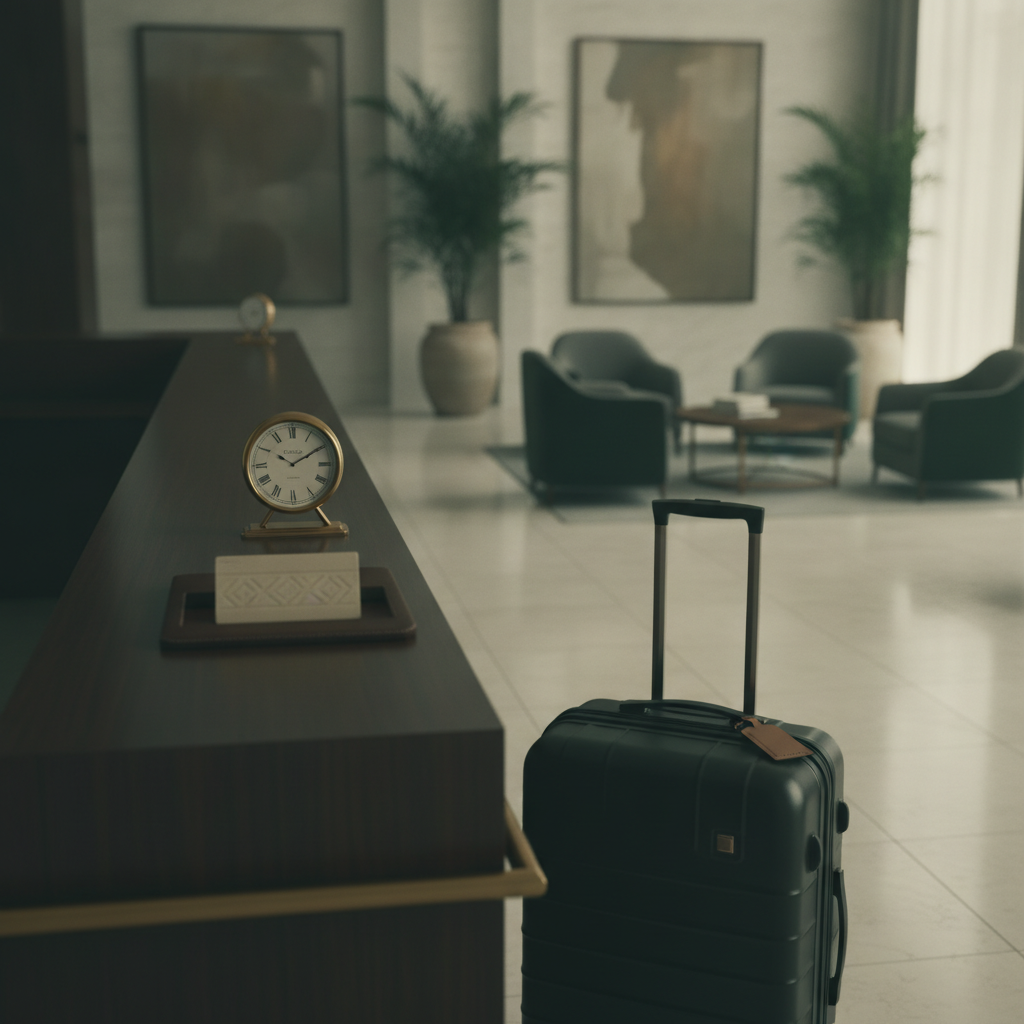
The flight landed before dawn. An hour into the city, bags in tow, the traveler reaches the lobby at ten in the morning. The staff smiles: check-in is at three. Where does one spend the next five hours — a question nearly every visitor to Korea eventually faces.
In almost any lobby, there is a version of this scene: a traveler seated on a sofa, suitcase parked beside them, phone open to a map of nearby cafés. Behind the front desk, housekeeping is still working through a list of rooms not yet cleared, and a manager scans the reservation system, calculating which room will be ready and when. Until that calculation resolves, the traveler waits.
The problem is simple on its surface. Hotels typically set check-in at 3 p.m. and check-out at 11 a.m. Guesthouses often check in earlier, sometimes as early as 1 or 2 p.m., or check out earlier still, and hanok stays vary property by property, making advance confirmation essential. Arrive without knowing this, whether off a red-eye flight or a late-night train, and the lobby sofa becomes the default waiting room.
The schedule exists not out of rigidity but out of physical necessity. Once the previous night's last guest checks out, a room must be cleaned, linens changed, the minibar checked, and a final inspection completed before it can be handed to the next guest — typically thirty minutes to an hour of work per room. Large hotels run this process across many rooms simultaneously, but the exact time a room becomes ready shifts daily depending on how many rooms turned over and how many guests are arriving. Smaller guesthouses and hanok stays, with fewer staff, sometimes need even longer.
So if the plan is to arrive earlier or leave later than the posted hours, asking in advance works far better than asking at the counter.
- After booking, email the property or message through the booking platform a few days before arrival to request early check-in or late check-out.
- Include the exact arrival or departure time and the reason — an early morning flight, a late-night train — so the property can plan room assignments accordingly.
- On the day itself, send a follow-up message or call once more; this gives a more accurate answer based on that day's actual room turnover.
- Whether the request is granted for free or comes with a fee depends on the day's occupancy — the busier the property, the more likely a charge applies.
- Even if the request cannot be granted, most properties will still hold luggage at the front desk, which means not having to drag a suitcase around all morning.
Hanok stays sometimes need more preparation time than standard hotels, particularly for heating the ondol floor or completing traditional cleaning routines. It is worth confirming check-in hours with the specific property before booking.
In the end, those five hours of silence are not a sign of indifference but the physical time it takes to remake a room. A short message sent before arrival can turn a wait on the lobby sofa into an unhurried morning at a café instead.
Lost something in Korea?
We help travelers recover items left behind at hotels and other locations in Korea, and send them anywhere in the world.
Find my item