TRAVEL NOTES / NO. 019
THURSDAY, SEPTEMBER 3, 2026
Korea Travel · 5 MIN READ129
There is a rule no one explains, yet everyone follows it
That hesitation in front of a subway priority seat reveals an unwritten order that governs Korean public transit as firmly as any rule
By Find to Send Editorial
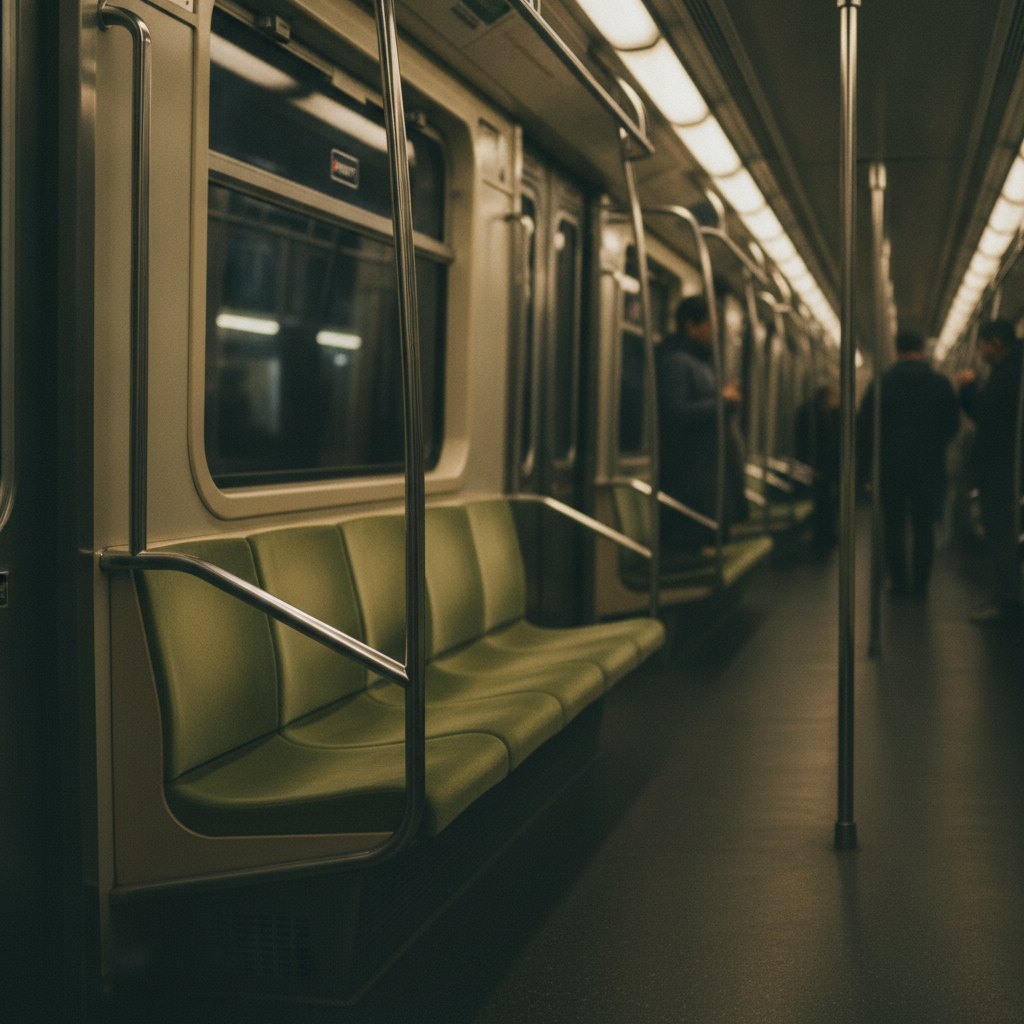
Line 2 of the Seoul subway, just past the morning rush, around eleven a.m. At both ends of the car, a handful of seats are a different color from the rest, and they sit empty even though every other seat is taken. If your legs ache from a long day of walking, it feels natural to head toward them. Then you notice the Korean passenger standing beside you glance away, almost deliberately. No one says a word, yet something tells you that you have misread the room.
Look closer at the sign above those seats and you will find small icons — an elderly person with a cane, a pregnant woman, someone holding a child — along with the words 'priority seat.' Nowhere does it say foreigners are forbidden from sitting there. There is no fine, no staff member enforcing it. And yet, no matter how packed the train gets, those few seats rarely fill up. It is as if an invisible line has been drawn around them.
Watch a little longer and other patterns emerge. People do make phone calls, but their voices drop to an oddly quiet register, almost a whisper meant only for the person beside them. Some step off at the next station just to finish a long call, then get back on. A traveler dragging a large suitcase might plant it in the middle of the aisle and chat freely, while locals twist their bodies sideways to slip past in near silence through the same narrow gap. No one gets angry. Everyone simply moves as though this is simply how things are done.
The difficulty for a traveler here is deceptively simple: you can feel that a rule exists, but you cannot see it written anywhere. The signage never uses the word 'forbidden.' The announcements do not command anything. Yet sitting in the wrong seat generates a faint, unmistakable discomfort in the air. Guidebooks explain how to buy a subway card, but rarely mention that leaving certain seats empty is simply the unwritten default. So many visitors end up drawing quiet disapproval, not out of rudeness, but purely from not knowing.
What makes it more confusing is that the rule is not even consistent. In the early hours, when a train is nearly empty, sitting in a priority seat draws no attention at all. Sit in the same seat during a crowded hour, though, and you feel eyes on you. This is a very Korean kind of etiquette — one whose intensity shifts with context, governed by an unspoken sense of 'reading the room' rather than a fixed line. For someone encountering it for the first time, the natural confusion is: when exactly is this allowed, and when is it not.
Trace this back to its roots and you find that much of Korean transit etiquette runs not on law but on a social mechanism called 'nunchi' — a finely tuned sensitivity to unspoken social cues. Priority seats appeared early in the subway's history, in the 1980s, under names like 'silver seats,' and have persisted not through legal enforcement but through decades of social campaigns and a cultural expectation of respect between generations. Disapproving glances, not penalties, are what actually enforce the rule. That pressure grows stronger among older passengers and among anyone who might genuinely need the seat, which is why you will often see a young person quietly rise from an empty priority seat the moment an elderly passenger boards.
The phone-etiquette pattern works on a similar logic. Korean subways and buses are dense, tightly packed spaces where hundreds of bodies move in close proximity within a single car. In that kind of environment, a raised voice on a phone call sharply increases the psychological density of the entire space for everyone nearby. Over time, speaking quietly became an unspoken form of mutual consideration, less a matter of formal politeness than a social noise-management system that lets a large number of strangers coexist comfortably in a confined space. The recorded announcements urging quiet phone calls did not create this custom; they simply put words to a habit that already existed, reinforcing rather than originating it.
So what should a traveler actually do?
- Treat priority seats as off-limits by default during busy hours, even if they are empty. If you see the distinct coloring or the cane, pregnancy, or child icon, check the regular seats nearby first before considering that one.
- If your legs genuinely ache or you are carrying heavy luggage and truly need to sit, first check whether the train is clearly quiet — early morning or late night are the safest windows. In those conditions it is rarely an issue, and simply standing up the moment an elderly or pregnant passenger boards resolves it.
- Prefer texting or messaging apps over phone calls when possible, and if you must take a call, lower your voice and keep it brief. If a long conversation is unavoidable, stepping off at the next stop to finish it and re-boarding afterward is a method locals themselves genuinely use.
- Keep large suitcases or backpacks close to your body, or use the space beneath seats or the luggage racks, so the aisle stays clear. This becomes especially noticeable, and especially appreciated, during the tight aisles of rush hour.
- When in doubt, the safest move is to spend three seconds observing the people around you. Where they sit, what they avoid, and how quietly they speak will tell you, in almost every case, what the unspoken standard is on that particular train — a genuinely useful survival skill across Korean social life more broadly.
Even with all this, small mistakes happen. Sitting down and then realizing your error a moment later, and simply standing back up, is something almost anyone experiences at some point, and virtually no Korean passenger holds it against a visitor. If anything, quietly noticing and correcting course tends to leave a good impression.
Return, in your mind, to that Line 2 car. The empty seats were never really a rule at all — they were a question the city quietly poses to strangers, asking whether you can sense that space here is divided not by statute but by mutual awareness of one another. Answering it does not require anything grand. A single beat of pausing to look around is usually enough.