TRAVEL NOTES / NO. 034
SATURDAY, SEPTEMBER 19, 2026
Luggage · 5 MIN READ151
What Survives the Hands That Throw Your Suitcase
Once you know what happens to a suitcase beneath the baggage belt, deciding what to check and what to carry becomes obvious.
By Find to Send Editorial
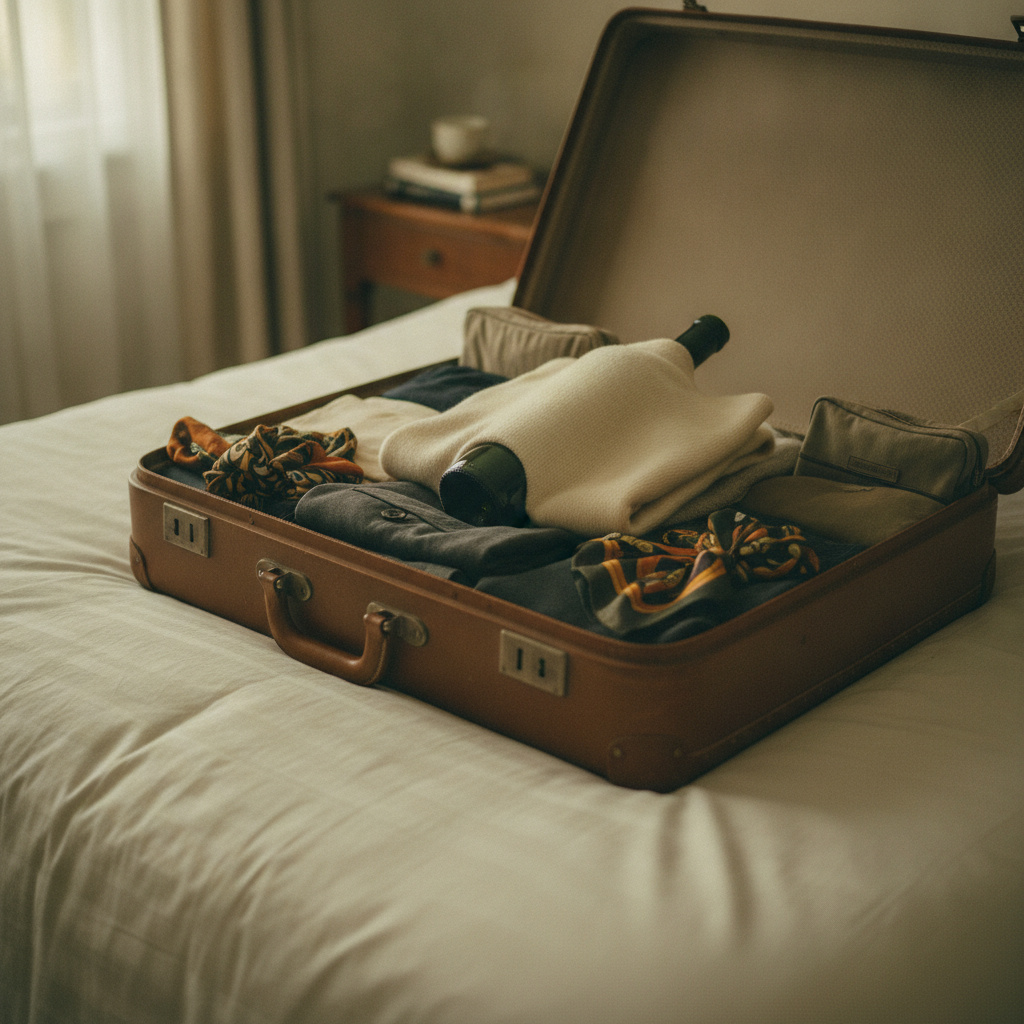
Standing at the baggage belt at Incheon, waiting for your suitcase to appear, you sometimes watch someone else's bag bounce as it hits the conveyor's edge. In that instant, everyone silently wonders the same thing: is everything inside my own suitcase still intact. If there's a laptop, a speaker, or a ceramic teacup in there, that worry becomes very specific very fast.
That worry isn't unfounded. Checked luggage is handled far more roughly than most of us imagine. Out of a passenger's sight, a suitcase rides a conveyor belt, slides down a chute, gets loaded onto a cart that crosses the tarmac, and finally sits crammed in a cargo hold pressed against dozens of other bags. None of this happens under a careful human eye the whole way through — much of it happens through machinery and rushed ground staff working against the clock.
Picture the space just behind the check-in counter. The moment an agent tags your suitcase and lets go, it slides onto the conveyor belt and disappears from view. The belt winds through a maze of branching paths, and at each turn the bag changes direction, knocking against its own edges and corners. The jolt when the belt stops and restarts, the dull thud of colliding with another bag — all of that translates directly into vibration and impact inside the case.
Things get rougher still in the loading area. Ground handlers have to load hundreds of bags into an aircraft's cargo hold within a fixed window of time. They cannot know what's inside any individual bag, and there's no way for them to find out. So suitcases get stacked, tossed, and buried under heavier bags. Inside the hold, the aircraft's vibration during takeoff and landing, plus pressure changes, add another layer of stress.
The real problem is that if damage happens during any of this, the passenger never sees it happen. There's no way to know what's going on inside until you retrieve the bag from the belt and open it up. And by the time you find shattered teacup pieces or a cracked laptop screen, it's already too late to do anything about the moment itself. Filing a damage claim with the airline afterward often gets you nowhere if they decide the packing was inadequate, which means an after-the-fact fix rarely resolves things fully.
What makes this even more frustrating is that the risk is predictable, yet it rarely feels real while you're actually packing. At home, folding clothes and tucking items in between them, everything looks calm and safe. It's hard to picture, in that quiet moment, what the same bag will go through on a conveyor belt a few hours later. That's exactly why so many people pack fragile items with no real protection and regret it only afterward.
The reason all this happens is straightforward. Checked baggage systems were never designed to handle the delicate contents of any individual bag with care. An airport's baggage system is fundamentally a logistics operation built to move as many bags as possible to the correct flight within a fixed time window. Its core objective is speed and accurate sorting — not the safety of what's inside any one suitcase. So bags are moved mechanically, and even where humans are involved, they're working under serious time pressure.
There's another layer to this. Airlines and ground handling companies operate under contract, and the workers physically moving bags are often not airline employees at all. That means there's no single party structurally positioned to take responsibility for the condition of every individual bag. In practice, the real responsibility for protecting what's inside falls to the traveler. Understanding this structure also explains why packing matters so much, and why airlines are often reluctant to compensate for damage claims.
So what should you actually do when packing.
- Place fragile items dead center in the suitcase. The corners and outer walls absorb impact most directly, so ceramics, glass, and electronics should sit in the middle, surrounded on all sides by clothing.
- Use your clothes as active padding. Even without dedicated packing materials, thick sweaters, towels, and folded shirts can absorb a surprising amount of shock when wrapped around an item. Make sure there's no empty space left between the item and the suitcase wall — pack it in tight.
- Carry on anything that's allowed to be carried on. Laptops, cameras, and small electronics permitted in cabin baggage under airline rules are fundamentally safer in your personal bag than in the hold, because the bag never leaves your sight and never goes through the belt or cargo loading at all.
- Double-wrap liquids or fragile bottles in a zip bag and clothing, and place them deep inside the case rather than near the edges. If you genuinely aren't sure an item can survive the trip, it may be worth reconsidering whether it belongs in checked luggage at all.
- Once you've finished packing, give the suitcase a gentle shake or press on it. If you hear anything rattling inside, that's a sign there isn't enough padding yet, and you should add more clothing to eliminate the gap.
With all that done, the next time you watch a suitcase bounce off the belt's edge, you can feel a little lighter about it. The quiet moment of packing at home and the noisy chaos on the belt feel like two separate worlds, but they're actually one continuous story. In the end, it's neither the airline nor the belt that protects what's inside your suitcase — it's the hands that packed it.
Hauling bags between stops?
You can send your luggage ahead — hotel to hotel, or between your hotel and the airport. We confirm the route and price with our partner first.
About Luggage ConnectionRead next
OCT 23, 2026 · Luggage
Incheon Airport Luggage Storage: Locations and Fees Vary by Source, Check Before You Go
OCT 14, 2026 · Luggage
How do you avoid grabbing the wrong suitcase at baggage claim?
OCT 5, 2026 · Luggage