TRAVEL NOTES / NO. 010
THURSDAY, AUGUST 27, 2026
Airport · 5 MIN READ130
How to Board Your Flight From Seoul Station — Hours Before Takeoff
Seoul Station's city airport terminal lets you check in, drop bags, and even clear part of immigration before you ever reach Incheon — but only for select airlines.
By Find to Send Editorial
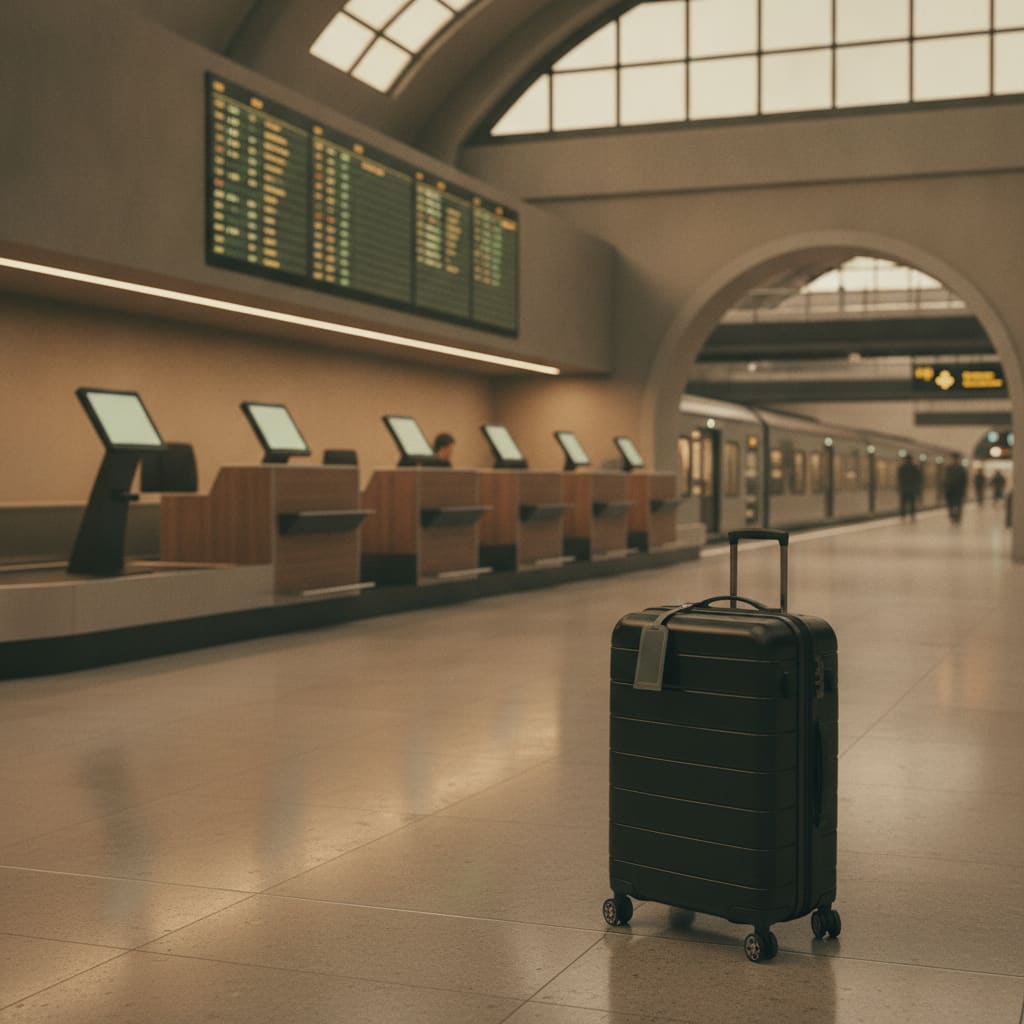
Dragging two suitcases through the underground corridor of Seoul Station, it feels strange to realize you are on your way to the airport, yet not there yet — and already, somehow, further along than you think. What if you could already be holding your boarding pass, your bags already checked, even your passport already stamped, before you ever set foot in Incheon? While most travelers wrestle with long check-in lines the moment they arrive at the airport, some are already sipping coffee on the airport express train. The difference is not some clever trick — it is simply knowing about one underground facility at Seoul Station.
The first time you hear about this, it sounds almost implausible. Check-in happens at the airport, doesn't it? Bag drop and passport stamps, surely, only happen in a building next to the runway. For anyone who has always assumed this, the idea that the same procedures happen in the middle of downtown Seoul feels unfamiliar. But this system has been running, quietly and reliably, for years.
On the second basement level of Seoul Station, one floor above the airport railway platform, sits the City Airport Terminal. In the early morning rush, commuters stream past in one direction while a handful of people pulling suitcases peel off in another. At the counters, flight numbers flash on a screen as a staff member checks passport and ticket, and the suitcase quietly disappears down a conveyor belt. In that moment, the traveler already holds a boarding pass, shoulders visibly lighter.
A few steps away sits another scene — an immigration booth, identical to the ones at the airport itself. Travelers line up, hand over their passports, and receive the stamp. It barely feels real that a substantial part of departure has already been completed, with more than forty minutes still left on the airport express train ride to Incheon. But because of this, once at the airport, there is no need to do anything but walk straight to the departure security checkpoint.
The catch is that this service is not open to everyone, in every situation. Only a limited number of airlines participate, and even among those, some allow check-in but not bag drop, or check-in and bag drop but not immigration. Many travelers simply never learn this facility exists. Others know about it but never confirm whether their specific flight qualifies, only to arrive and find the counter cannot process them.
Worse still is realizing this too late — already at the airport, with no time to go back to Seoul Station. The traveler ends up standing in the same line as everyone else, having lost the very time and energy this service was meant to save. The gap feels sharper on an early-morning departure, or when traveling as a family with a mountain of luggage.
The reason this service isn't open to every airline has nothing to do with simple policy preference — it comes down to system integration between the airline, the airport, and the operator of the city terminal. Check-in and bag drop require a live connection to each airline's reservation system, and checked bags must travel by conveyor and dedicated vehicle from Seoul Station to Incheon, passing security screening along the way. Building and maintaining that logistics chain requires a separate agreement and system investment from each airline, so not every carrier chooses to participate.
Immigration works the same way — it must connect to the government's border control system, and staffing a booth costs money regardless of volume. That's why some airlines offer check-in but not immigration clearance, and others offer nothing at all. In practice, the system tends to center on large carriers with the passenger volume and infrastructure to justify the integration, while low-cost carriers and some foreign airlines are often left out.
To actually use this well, the safest approach follows a specific order.
- Before you travel, confirm whether your booked airline participates in the city airport terminal program at all — and specifically, which of the three services (check-in, bag drop, immigration) it covers, since these vary by carrier.
- Check the operating hours of the facility, since it runs on a fixed schedule and often requires a minimum or maximum window before your flight's departure time — arriving too early or too late may mean you can't use it.
- Bring your passport and your flight ticket or e-ticket confirmation without fail; if checking bags, the same size and weight rules apply as at the airport, so it's worth confirming your airline's baggage policy beforehand.
- If your airline doesn't qualify, or the timing doesn't work, don't waste time trying to force it — head straight for the airport express train or another route and complete standard check-in at Incheon instead.
- Once you've finished at the city terminal, keep your boarding pass and stamped passport safe; upon arrival at Incheon, go directly to departure security — there is no need to visit a check-in counter again.
Someone who already holds a boarding pass underneath Seoul Station can watch the scenery blur past the train window with a little more ease. Once you realize the journey doesn't begin at the airport but at a procedure, the weight of both your luggage and your time feels just a little lighter.
Getting to or from the airport?
You can request a pickup or drop-off between Incheon or Gimpo airport and Seoul or nearby areas. We confirm the vehicle and price first.
About Airport Transfer