TRAVEL NOTES / NO. 024
TUESDAY, SEPTEMBER 8, 2026
Travel Problems · 5 MIN READ109
The Moment the Card Disappears, the Clock Is Already Running
Few travelers realize that losing a card abroad turns into a race where minutes decide who bears the loss
By Find to Send Editorial
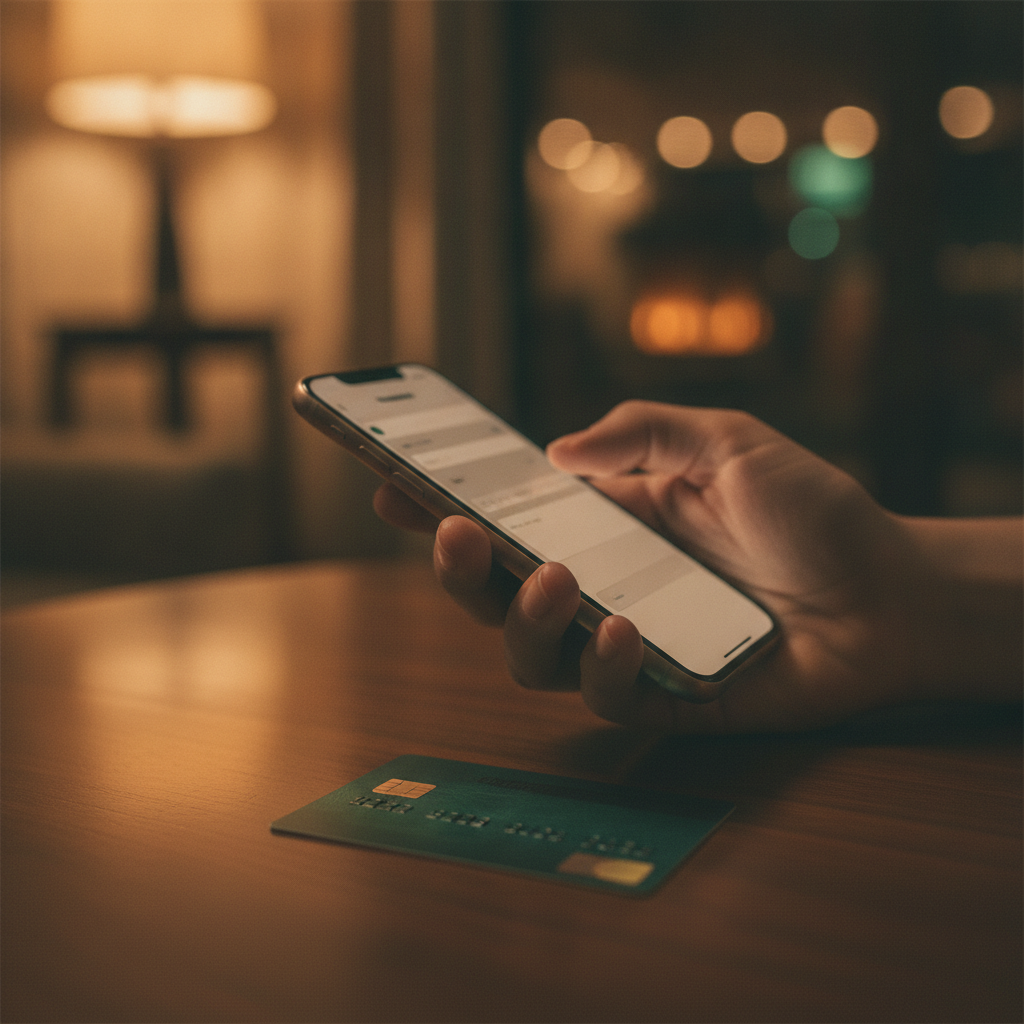
Stepping out of an airport restroom, hands still damp, you check your bag one more time and notice a card missing from your wallet. It was there minutes ago, you are almost certain, but you cannot pin down exactly where it slipped away. The airport, the taxi, the currency exchange counter where you briefly set your wallet down. Your mind goes blank while your fingers keep tracing the empty slot.
What makes this moment strange is that the real crisis is not the loss itself, but what happens in the minutes right after you notice it. The instant you realize the card is gone, an invisible clock quietly starts running.
Picture a late afternoon in an unfamiliar city, standing on a street corner just before hotel check-in. Shop signs in a language you cannot read surround you, your phone battery sits around thirty percent, and roaming data crawls along slower than usual. Your fingers move faster through the wallet's card slots, and your heartbeat picks up along with them.
A thought cuts through: maybe the card was left on the café table you just walked away from, or maybe it slipped into the crease of the taxi's back seat. Nothing is certain, and there is no easy way to check. All you can do is turn the wallet upside down and shake it once more.
The real problem here is not the inconvenience of losing a card. It is that from the moment it disappears, the possibility begins that someone else will pick it up and use it. And who bears responsibility for that misuse depends heavily on how quickly the cardholder reports it.
This feels especially confusing abroad because the usual reflexes do not apply. Back home, a few taps on a familiar banking app would settle things quickly. Overseas, unstable roaming data and time-zone gaps raise the fear that a call center might take longer to reach. There is also the hesitation of not knowing whether it was truly stolen or just misplaced, and the worry of reporting too hastily only to find the card later. Those few minutes of hesitation are, in practice, the most dangerous stretch of all.
To understand why, it helps to know how card issuers actually determine fraud liability. Printed on the back of every card, and listed again inside the issuer's app, is a dedicated international emergency number reachable from abroad. The moment a loss or theft is reported through that number, the card is suspended immediately, and the system logs the exact time of the report. Every authorization request after that timestamp is automatically declined, which means the cardholder is, in principle, not held liable for fraudulent charges made afterward.
The flip side is that charges made before the report can become murkier. Card issuers distinguish between legitimate use and use by whoever picked up the card, using the report timestamp as the clearest and most objective marker. They may also look at how the card information was compromised, or whether signature and PIN checks were properly followed, but the reported time remains the anchor point. This is precisely why issuers maintain a separate international emergency line, repeated on both the physical card and the app, keeping multiple doors open for a traveler who may be too flustered to think clearly in the moment.
So what should you actually do the instant a card goes missing.
- Before you even leave home, photograph the back of each card and save the images, along with a screenshot of the issuer's app, somewhere accessible like cloud storage or your email. Since losing the wallet also means losing the card's printed number, doing this in advance is arguably the single most important preparation.
- The moment you notice the loss or theft, call the saved international emergency number right away. If your own data connection is unreliable, borrow hotel wifi, ask a nearby café, or even use the phone at an airport information desk. A few dollars spent on an international call is a far smaller price than a few minutes of delay.
- Once connected, make sure to note the exact time the report was received and any reference number given, since that timestamp becomes the anchor for determining liability afterward. Request written confirmation by text or email if the issuer offers it.
- If the call is delayed or fails to connect, check whether the issuer's app has an instant-freeze feature first. Many issuers now let cardholders temporarily suspend a card through identity verification inside the app, buying valuable time while you keep trying to reach a live agent.
- After reporting, file a loss or theft report at a local police station and keep a copy, since this document is often needed separately for travel insurance claims or reissuing other lost identification.
- With the card suspended, arrange a backup card, some cash, or another payment method so the rest of your trip is not disrupted, keeping in mind that a replacement card is usually issued only after you return home.
Looking back at that street corner, wallet turned inside out, what was actually needed in that moment was not perfect composure but a phone number saved somewhere in advance. Travel usually leaves behind photographs and memories, but every so often, whether a single card was photographed beforehand quietly decides how the rest of the trip unfolds.
Lost something in Korea?
We help travelers recover items left behind at hotels and other locations in Korea, and send them anywhere in the world.
Find my item