TRAVEL NOTES / NO. 004
SATURDAY, AUGUST 22, 2026
Korea Travel · 5 MIN READ105
Midnight in Seoul: Why Waving at a Taxi Is the Wrong Move
An empty taxi seat feels impossible to find past midnight in Seoul, and it is not bad luck — it is how the system is built at that hour
By Find to Send Editorial
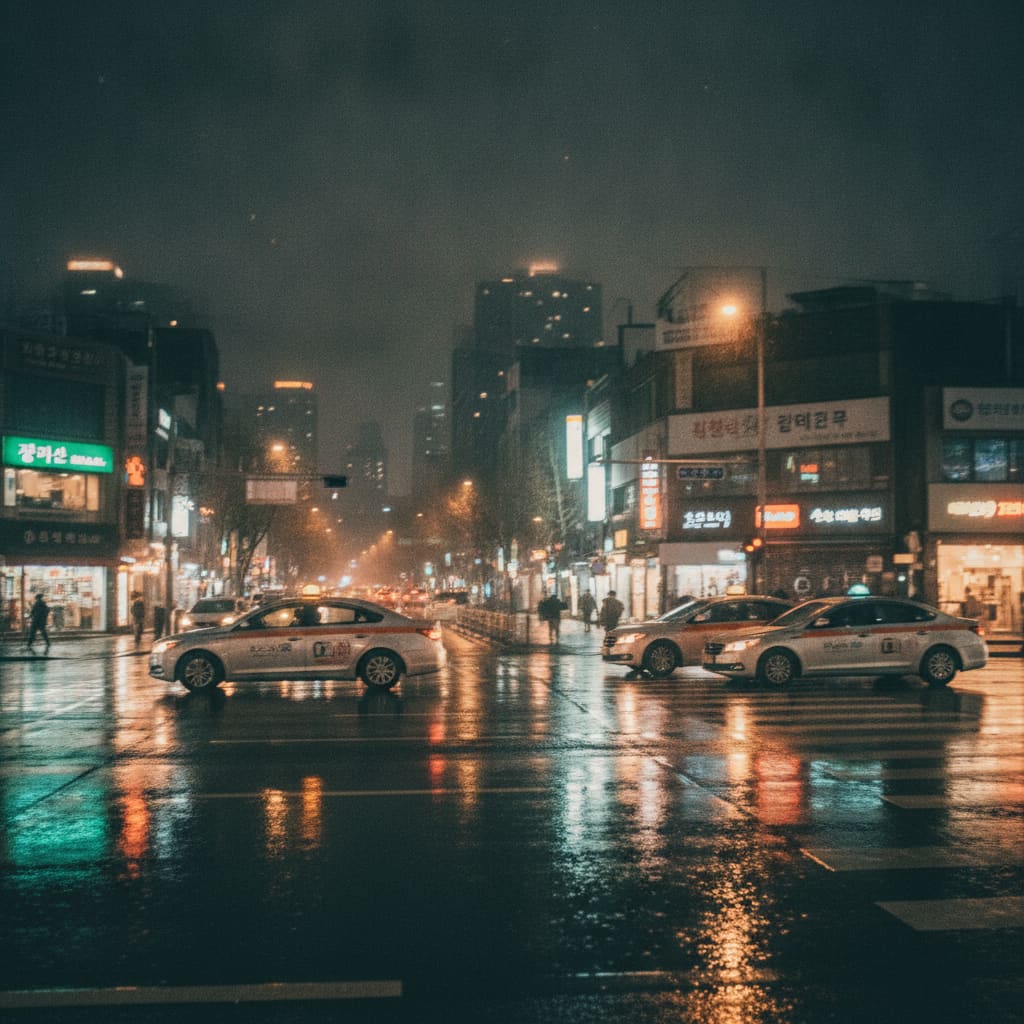
I once stood on a street in Gangnam a few minutes before midnight. People spilling out of dinners and drinks turned toward the road one by one, arms raised. Empty taxis passed, but none stopped. Through the windows, the drivers looked indifferent, as if they had already decided the answer before anyone could ask where they were going. Ten minutes passed, then twenty, and nothing changed. Taxis were clearly still running — so why couldn't anyone catch one right then.
The strange part is that the same street, the same spot, looks completely different just an hour later. By around 1:30 a.m., you might suddenly see taxis lined up waiting. What exactly happens in between is worth understanding.
Back on that midnight street, more people join the same quiet struggle. Someone flicks their phone screen on and off, refreshing a hailing app with visible impatience. Someone else keeps an arm raised, eyes tracking every passing car. A group that had been chatting outside a convenience store quietly drifts toward the curb as midnight approaches. Everyone is solving the same problem in their own way.
From the driver's side, this hour looks entirely different. Many drivers are timing their return to the garage to meet shift-change deadlines and daily quotas, and that exact moment collides with the surge of passengers trying to get home late at night. Taxis are on the road, yes — but a large share of them are already carrying someone, or heading in to finish their shift.
The real problem is not simply that there are fewer taxis. What actually makes it hard is not knowing, in the moment, whether the empty-looking cab passing you right now will actually stop. Being passed over again and again breeds a kind of anxious impatience, and that impatience often keeps people rooted in an inefficient spot instead of moving somewhere better. The more unusual or awkwardly far your destination, the worse this uncertainty gets.
Layered on top is the late-night surcharge, which complicates the decision further. Most people know the fare goes up, but far fewer know exactly when the surcharge starts, or whether hailing on the street versus through an app changes the price. The result is a stretch of night where both the wait itself and the fare become sources of quiet anxiety at the same time.
Understanding this requires knowing how taxi operations actually work around midnight in Seoul. A large share of corporate taxis run on two-shift systems, and the shift changeover is often clustered right around midnight. That means drivers finishing the day shift are heading back to the garage, while night-shift drivers haven't fully entered dispatch rotation yet — creating a real, physical dip in the number of taxis actually working the road. Demand, meanwhile, moves in the opposite direction: dinners, gatherings, concerts and events tend to end between eleven p.m. and midnight, sending a wave of people onto the street at once wanting to go home. Supply drops exactly as demand spikes. Once you see this structure, the midnight difficulty stops feeling like personal bad luck and starts looking like a citywide scheduling pattern.
This is also why hailing apps are more reliable than standing on a curb. With an app, the destination is already entered into the system before dispatch, so a driver accepts the ride already knowing which direction they'll be heading. Someone waving from the street offers no such information — the driver has to decide whether to stop without knowing where the passenger wants to go. In an hour full of drivers timing their return to base, they naturally favor a match with a known, convenient direction over an unknown one. The app doesn't reduce the uncertainty — it removes it entirely before the car ever arrives.
So what should you actually do around this hour.
- If you expect to need a ride near midnight, open the hailing app early — around eleven p.m. — and watch the situation rather than waiting until you're already stranded, since moving just ahead of the surge cuts wait time significantly.
- If dispatch keeps failing, try changing where you're standing — a smaller side street on an actual taxi route, especially near a traffic light where cars slow down, often works better than a wide main road.
- If your destination is somewhat unusual or far, enter it clearly when booking through the app, since a precise destination lets the driver judge direction and accept with confidence.
- Know in advance that the late-night surcharge applies the same whether you hail by app or by hand — it isn't the app charging extra, it's simply the hour itself falling inside the surcharge window.
- If dispatch keeps failing entirely, it isn't unreasonable to wait it out at a nearby café or convenience store and try again later, since dispatch often becomes noticeably smoother once the shift-change gap passes, around 1 a.m.
That night, some people on that street were still standing with an arm raised, while others were already watching a small car icon creep closer on their phone screen. Same place, same hour, but headed toward very different outcomes. The midnight street looks equally empty to everyone — but only the person who understands why it's empty gets the door open a little sooner.
Getting to or from the airport?
You can request a pickup or drop-off between Incheon or Gimpo airport and Seoul or nearby areas. We confirm the vehicle and price first.
About Airport Transfer