TRAVEL NOTES / NO. 036
MONDAY, SEPTEMBER 21, 2026
Korea Travel · 4 MIN READ112
Twenty Minutes Staring at the Departure Board: KTX Doesn't Wait for the Unbooked
A sold-out sign at Seoul Station reveals the real rule behind Korea's high-speed rail
By Find to Send Editorial
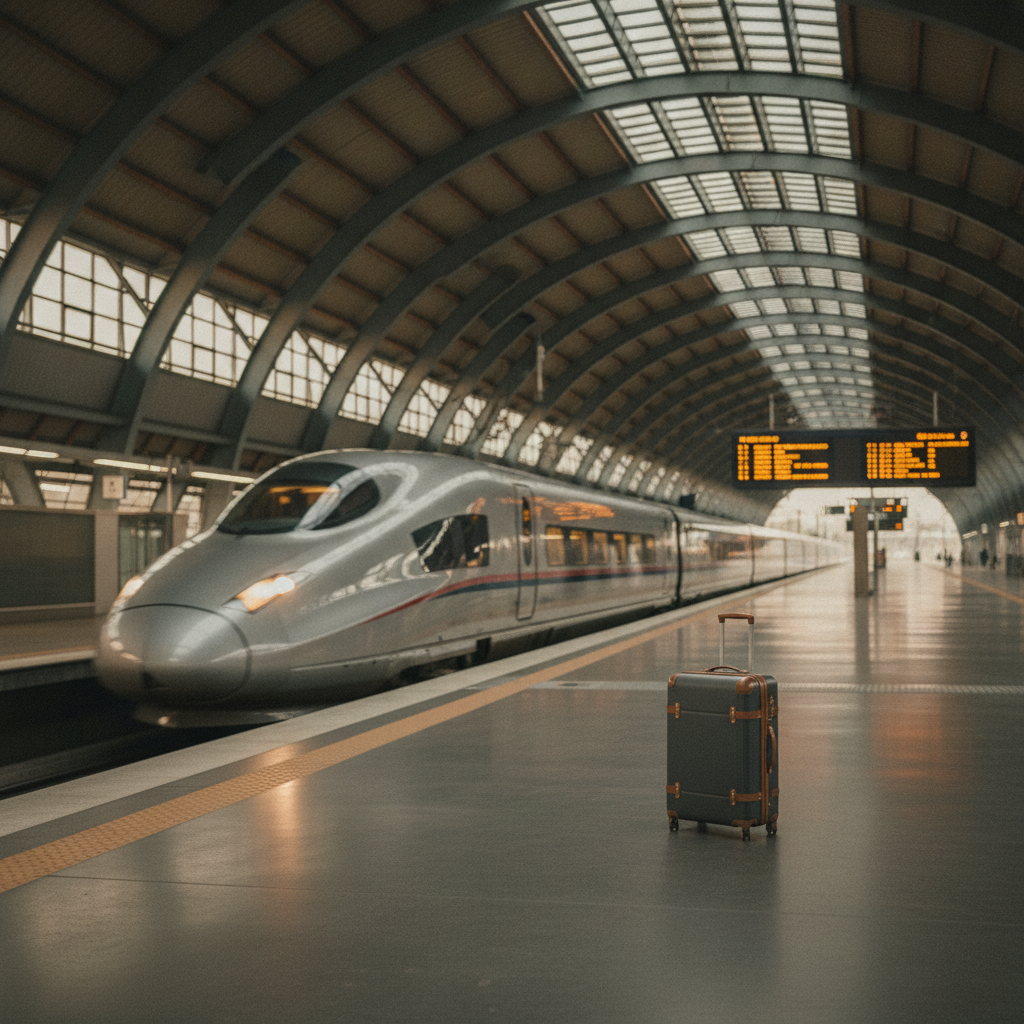
Seoul Station, four in the afternoon. The line under the departure board for the Busan-bound KTX looked mercifully short. Then the agent taps the screen twice, shakes his head. "Even standing tickets are gone today." For a moment the traveler doesn't quite process it. The train is sitting right there on the platform — how can there be no ticket at all. The more a person assumes trains, like buses, are something you simply walk up and board, the sharper this confusion lands.
This scene repeats itself especially on Friday evenings, the days before a national holiday, and summer-vacation weekends. A small crowd gathers in front of the counter, suitcases in tow, each person refreshing a train app on their phone. The announcement calmly confirms the next train is departing on time, while those without tickets sink into the waiting-hall seats listening to it. The clatter of suitcase wheels on marble floor, the anxious glance at a wristwatch, and the red "Sold Out" on the ticket screen — these three details together are the real shape of this problem.
The issue isn't simply that tickets are gone; it's that travelers usually find out far too late. Miss a flight and there's often another one, or at least a rebooking desk to negotiate with. But if the KTX route to a smaller regional city only runs a handful of times a day, the next train might be two or three hours away — or entirely booked for the rest of the day. Check-in times, dinner plans, next-day itineraries all start to slide like dominoes. For a foreign traveler, real-time Korean announcements are hard to follow, and improvising a backup — an intercity bus, a slower conventional train — isn't something you can figure out on the fly. The stress of a trip going off-script very often starts at exactly this small, overlooked first step.
Why does this happen. Korea's high-speed trains, like KTX, operate on a fully reserved-seat system, much like an airplane. Even standing tickets are capped — sold as tickets valid for aisle space, not seats, but still limited in number — so a train cannot simply absorb an unlimited crowd. The number of passengers a given train can carry is a fixed physical number, and that number is consumed in real time through the online reservation system. Korean travelers, as a matter of habit, reserve seats through their phones days or even weeks ahead. During holidays, tickets for popular departures can vanish within minutes of the booking window opening. So by the time someone walks up to a station counter or a self-service kiosk thinking "I'll just buy one now," the allocation of that finite resource is often already over. Unlike air travel, where advance purchase feels obvious, trains carry a lingering assumption of being a walk-up mode of transport — and that mismatch is exactly what produces this recurring problem for visitors.
So what should a traveler actually do. First, the moment your itinerary is set — ideally several days ahead, and on the very day booking opens if it's a holiday period — reserve through the Korail Talk app or the Korail website; foreign visitors can register and pay with just passport details and an email, and the interface supports English. Second, if your preferred time slot is sold out, check departures thirty minutes to an hour earlier or later; demand often clusters around one popular slot while adjacent trains still have room. Third, even when the app shows no seats, cancellations release in real time, so refreshing periodically in the hours before departure can still turn up a seat. Fourth, if you're already at the station and booking is closed, ask the counter staff both about standing tickets and about seat availability on a later train, while simultaneously checking the intercity bus terminal for the same route as a backup — Korea's bus network is dense enough to cover most gaps left by a full train. Fifth, during true peak periods — Lunar New Year, Chuseok, or summer weekends from Friday afternoon through Sunday — it's simplest to lock in round-trip tickets for the whole trip well in advance, rather than leaving any leg to chance.
Picture that same waiting hall at Seoul Station again. This time, instead of walking to the counter, the traveler already chose a seat from a diagram on their phone days earlier. The red "Sold Out" on the board is no longer their problem to solve. In the end, this one small habit is the quiet fork in the road that decides whether the rest of the trip runs on schedule or not.
Getting to or from the airport?
You can request a pickup or drop-off between Incheon or Gimpo airport and Seoul or nearby areas. We confirm the vehicle and price first.
About Airport Transfer