TRAVEL NOTES / NO. 013
FRIDAY, AUGUST 28, 2026
Travel Problems · 3 MIN READ53
Cash, Card, or ATM — How to Fund Your Wallet in Korea
Before you queue at the airport exchange counter, it helps to understand how payment actually works in Korea
By Find to Send Editorial
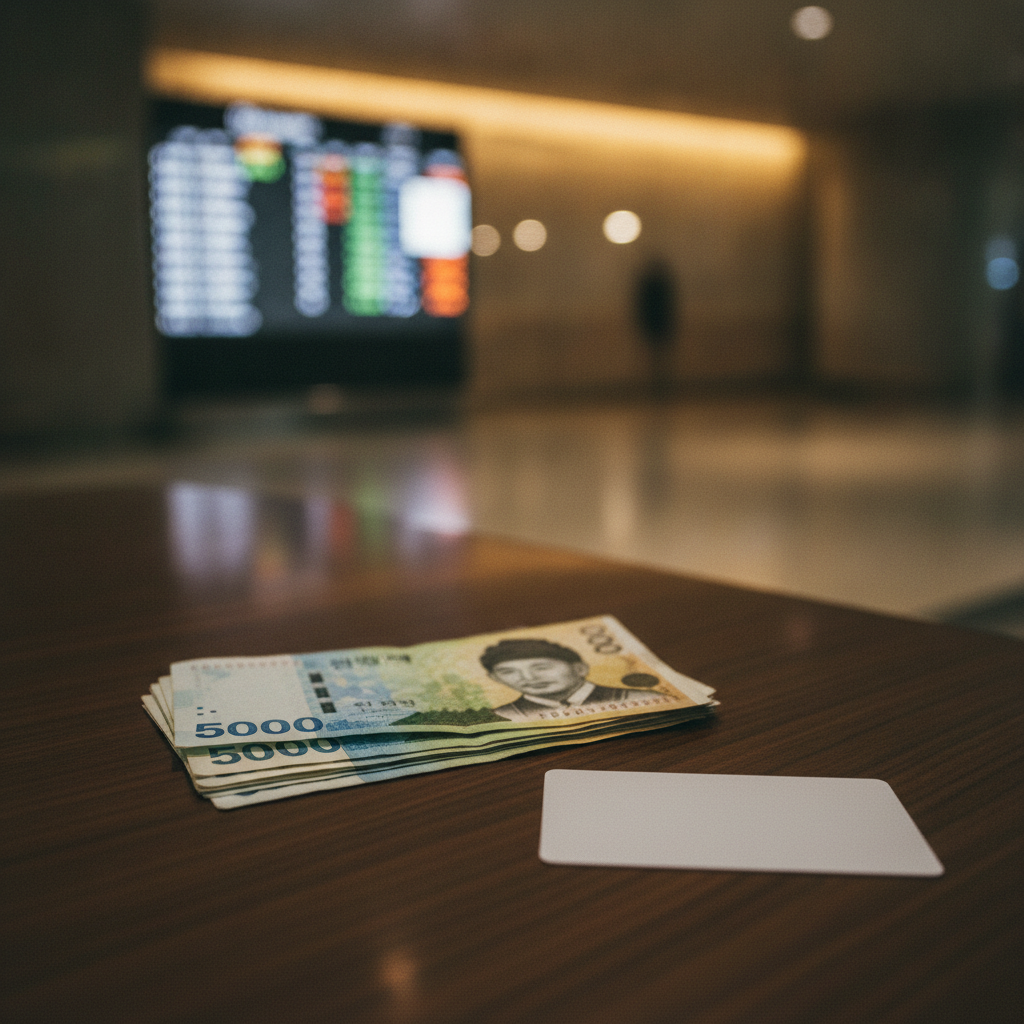
At Incheon Airport's arrival hall, a few travelers wheel their suitcases up to the currency exchange counter and join the line. Behind the glass, exchange rates blink in red digits, and their wallets hold not a single Korean won yet. How much to change, or whether to change at all, leaves most of them a little unsure.
The scene repeats itself whether it is a booth at Seoul Station or a private exchange shop tucked into a Myeongdong alley. Travelers keep facing the same three questions: how much cash to carry, whether a card will simply work, or whether it is smarter to withdraw from a local ATM after landing.
The trouble is that the math behind each option is different. Currency exchange fees and rate spreads vary widely between banks and booths. Local ATM withdrawals often carry an overseas cash withdrawal fee. Card payments are convenient, but every so often a merchant simply will not take a foreign card.
The underlying reason for this confusion is that Korea's card payment infrastructure is unusually dense. Convenience stores, restaurants, taxis, even market stalls often carry a card terminal. As a result, the moments when cash is truly indispensable are fewer than most travelers expect. Exchange a large sum before the trip without knowing this, and it is common to end up carrying a thick, mostly unused wad of bills for the entire visit.
What many travelers actually do is simpler than it sounds. They prepare only a small amount of cash in advance, then rely on a card that supports overseas payments for everything else.
- Exchange or bring only a small amount of cash to cover the first day or two after arrival.
- Default to card payment wherever it is accepted.
- Handle cash-only moments, such as certain traditional markets or small shops, as they come.
Check your card issuer's overseas payment and ATM withdrawal fee terms before you leave, so there are no surprises once you land.
Cash is the backup; the card is the default.
The line at Incheon's exchange counter still forms every day. But when the reason for standing in it is not to fund an entire trip, only to cover a day or two of margin, the wallet ends up considerably lighter.
Lost something in Korea?
We help travelers recover items left behind at hotels and other locations in Korea, and send them anywhere in the world.
Find my item