TRAVEL NOTES / NO. 023
MONDAY, SEPTEMBER 7, 2026
Korea Travel · 5 MIN READ136
One card, one fare logic: how Korea quietly rewrites your transit bill mid-transfer
A single card bought at a convenience store quietly adjusts what you pay as you move between subway and bus — if you know how to use it.
By Find to Send Editorial
On the airport bus heading into the city, unfamiliar signs slide past the window. You get off near your destination and head down into the subway station, and a small doubt surfaces. You just paid for the bus — will tapping the card again at the subway gate mean paying the full fare a second time? The card in your hand suddenly feels unfamiliar.
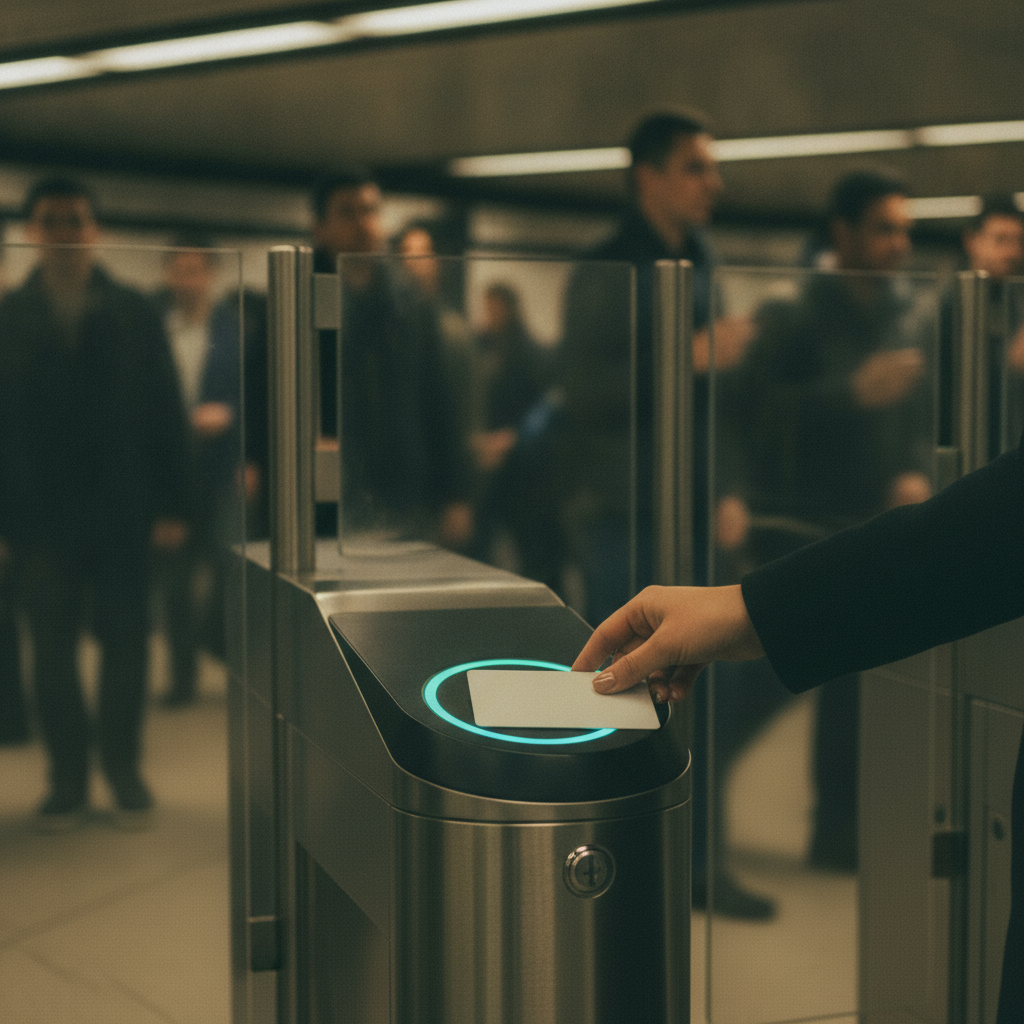
Whether in Seoul or Busan, you often see travelers hesitate for a beat in front of the subway turnstile. They glance once more at the reader screen before tapping, hurrying under the gaze of the line forming behind them. The gate answers with a short electronic beep and a flash of green, a number flickering on the screen and vanishing before there is time to register what it meant. People are already climbing the stairs.
The same small scene repeats on buses. Some passengers ring the bell and simply step off; others make a point of tapping the card once more before the door. Watching from the outside, it is impossible not to wonder what that extra tap actually changes, and why some people bother while others do not.
The underlying issue is that this country's public transit fares are not calculated separately for each mode of transport — they are tied together through a single card. If you tap again within a set window of time when switching from subway to bus, or bus to subway, part of the fare is discounted, or no additional base fare is charged at all. But this transfer benefit is calculated silently in the background; there is no visible sign or step-by-step instruction explaining it. As a traveler, it is genuinely hard to know whether you are receiving the benefit at all.
What confuses people even more is the act of tapping when getting off. If you do not tap again when exiting a bus, the next transfer may not register correctly, or you may end up charged the maximum possible fare. Almost no one is warned about this in advance. Travelers either copy what locals do, or piece together what happened later from a payment record in an app.
This structure exists because the transit card is not simply a payment method — it is designed as a system that tracks an entire journey. Every tap sends the location and timestamp to a central server, which compares it against the previous tap to decide whether this is a new trip or a continuation of the last one. Get off the subway and board a bus within the allowed window, and the server treats it as one connected journey rather than two separate ones, recalculating the fare accordingly. Miss that window, and the system treats it as an entirely new trip, charging the base fare again.
The reason you must tap when leaving a bus follows the same logic. Bus fares are often distance-based, so the exit tap is what allows the system to calculate the actual distance traveled and settle the correct charge. Without it, the system may assume you rode to the very end of the route, or fail to recognize your next transfer — either way, resulting in a higher fare. None of this is explained by a person standing there to guide you; it runs quietly on the system's own internal logic. For locals it is muscle memory; for a first-time visitor, it can feel like an invisible rule.
In practice, using the card while traveling is not complicated at all.
- Buy a transit card at a convenience store in the airport or near a subway station — most major chains sell them, and since the card itself often carries no starting balance, ask the clerk whether it needs to be charged right away.
- Load whatever amount you need at the convenience store counter, paying with cash or another card; if your trip runs several days, charging a generous amount at once saves you from hunting for a store every time.
- On the subway, tap the card at the turnstile reader when entering, and be sure to tap again when exiting — both taps are required for the system to calculate the correct fare for your actual journey.
- On the bus, tap at the front-door reader when boarding, and after ringing the bell to get off, tap once more at the reader by the rear or front door; forgetting this exit tap can erase your transfer benefit or add extra charges, so it helps to have the card ready in hand before your stop.
- When switching between subway and bus, tapping the next mode of transport within the allotted window generally applies the transfer fare automatically; since the exact time limit can vary slightly by city and time of day, it is worth moving unhurriedly on your first day in a new city while you get a feel for the system.
- If the balance is too low, the turnstile will sound an error and refuse entry — there is no need to panic, simply find a nearby convenience store or an in-station charging machine and top up before trying again.
- If you have leftover balance at the end of your trip, some convenience stores or designated counters offer refunds, so it is worth checking your remaining balance before you leave the country.
Return, for a moment, to that spot in front of the subway turnstile. In the brief instant of the tap, behind the beep and the flash of green, a quiet system is calculating the connection to the bus you just rode. You cannot see that calculation happening, but one small habit — tapping the card again on the way out — is enough to make it work in your favor. Moving through this city, in the end, comes down to learning one invisible rule by heart.
Getting to or from the airport?
You can request a pickup or drop-off between Incheon or Gimpo airport and Seoul or nearby areas. We confirm the vehicle and price first.
About Airport Transfer