TRAVEL NOTES / NO. 015
SUNDAY, AUGUST 30, 2026
Airport · 3 MIN READ60
At Incheon, the Layover Looks Comfortable on Paper. It Rarely Feels That Way.
Travelers trust the connection time printed on their itinerary — until they reach the recheck line and realize the math was never that simple.
By Find to Send Editorial
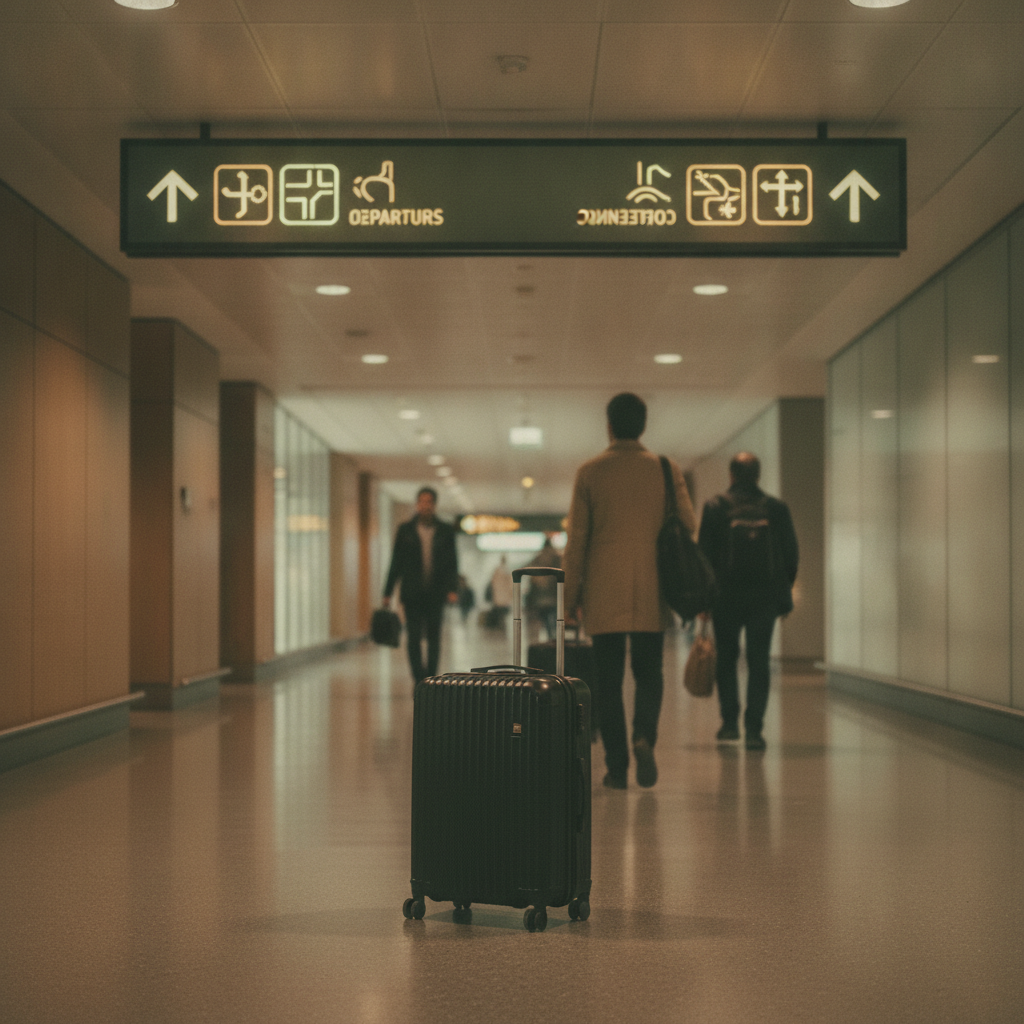
On the escalator leading to the transfer gates, a passenger checks his watch for the third time. His itinerary said one hour and forty minutes between flights. Both the travel agent and the airline app had said it would be fine. But ahead of him now is a line for baggage recheck, and he cannot see the end of it.
This is the recheck screening point in Incheon's Terminal 1 transfer zone, where international passengers moving to another international flight pass through security again. It is not the arrival hall — it is a transfer-only space — yet passengers are lifting suitcases onto belts and removing shoes, repeating a process they went through barely thirty minutes earlier, on the plane they just left.
This is where the problem starts. The minimum connection time (MCT) printed on a ticket is only the theoretical floor the airport guarantees — it does not account for that day's congestion, the specific airline combination, or how far apart the gates or terminals happen to be. The same one hour forty minutes can feel spacious on one day and, on another, mean sprinting toward a gate as the final boarding call plays overhead.
Why the difference. It comes down to interline baggage agreements between airlines. If the two carriers have an agreement, bags transfer automatically to the final destination and the passenger only needs to move themselves. If there is no such agreement — often the case across different alliances — baggage may not transfer automatically, requiring a recheck: retrieving and rechecking the bag, which means an extra security screening and a trip to a check-in counter. That takes time.
So the practical answer looks like this.
- When booking, check whether the two flights belong to the same airline group or have an interline agreement. If unclear, ask the ticketing channel or the airline directly.
- If through-checking to the final destination is possible, confirm at check-in that the bag is tagged all the way through.
- If a recheck is required for your combination, do not take the printed minimum connection time at face value — build in extra time.
- If you hit a recheck screening point during transfer, treat it as a sign the process is working as intended, and immediately reconfirm your next gate's boarding cutoff time.
The connection time is a number, but every transfer wears a different face.
If your connecting flight switches to a different alliance or a low-cost carrier, assume baggage is less likely to transfer automatically and plan accordingly.
The passenger on the escalator eventually cleared the line and reached his gate. When he checked his watch the third time, twelve minutes remained. The next traveler will likely see the same number, the same signage — and meet an entirely different day.
Lost something in Korea?
We help travelers recover items left behind at hotels and other locations in Korea, and send them anywhere in the world.
Find my item