TRAVEL NOTES / NO. 003
FRIDAY, AUGUST 21, 2026
Travel Problems · 5 MIN READ119
The card was declined three times at a convenience store checkout — the terminal was never the problem
When a foreign card fails in Korea, the real culprit is usually the issuer's fraud filter, not the store — and it takes minutes to prevent before you fly
By Find to Send Editorial
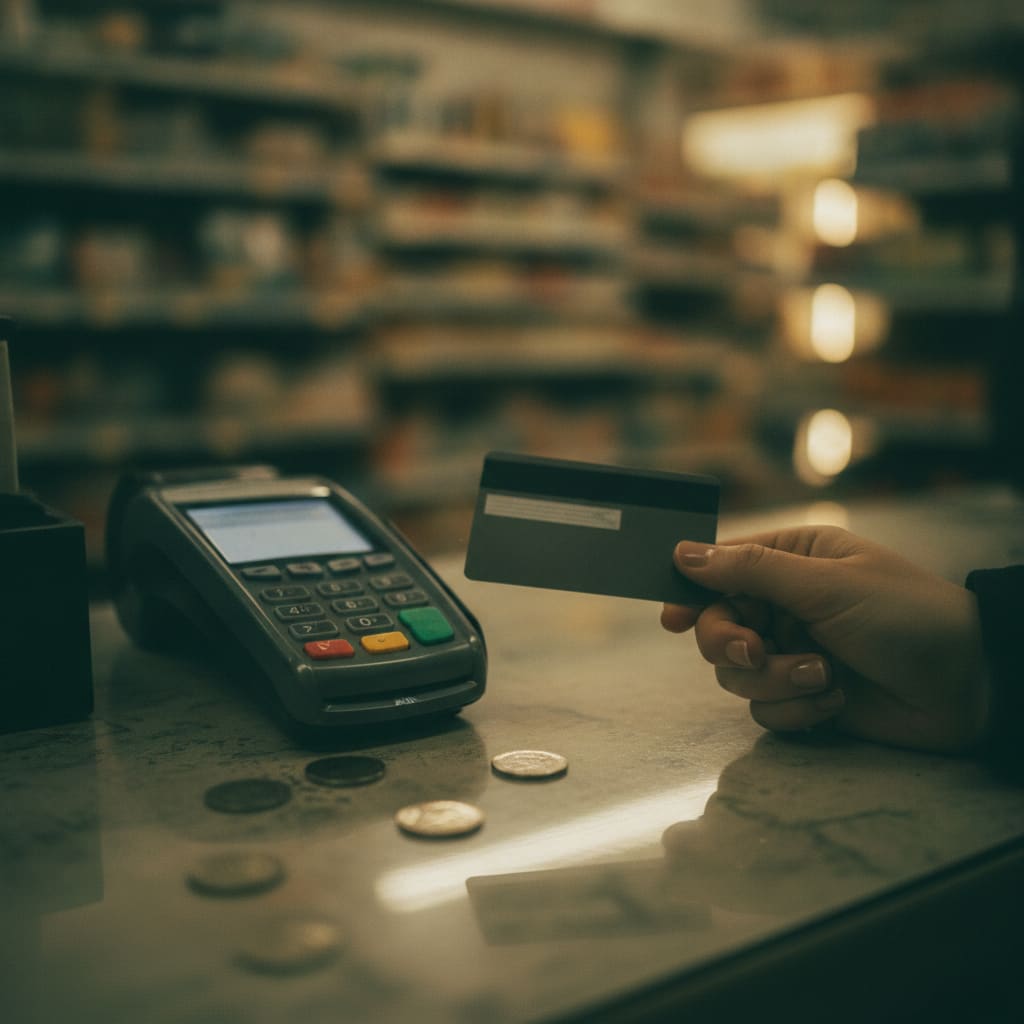
At a convenience store in Seoul's Myeongdong, two people are already in line. A traveler sets down a rice ball and a bottle of water, taps the card on the terminal. Instead of the usual beep, an unfamiliar error message flashes on the screen. She taps again. Declined again. The clerk smiles awkwardly and asks if she has another card. She can feel the eyes of the person waiting behind her.
Most travelers, in this moment, blame the terminal first. Korea is famous for fast, frequent card payments, so it's easy to assume this particular machine is old or simply can't read a foreign card. In reality, the problem far more often starts somewhere else entirely.
Look closer at the scene. The clerk taps the terminal a few more times, flips the reader, tries swiping the magnetic stripe. The traveler digs through her wallet for another card. The customer behind shifts their weight and glances at their phone. In this whole tableau, the actual cause isn't held by the store or the clerk. Right now, the key to the problem sits neither in her bag nor on the counter, but somewhere on a card issuer's server back home.
The trouble is that this isn't a simple machine malfunction. If the card is valid and the balance is more than enough, yet keeps getting rejected, the likely cause isn't a defect in the card itself but a safeguard the issuer has deliberately put in place. For the traveler, the frustration doubles: nothing visibly wrong, the store staff can't help, and in that moment spotty wifi or the impossibility of an international call makes even phoning the bank feel out of reach. Meanwhile cash is short too, and time just ticks away at the register.
What makes it worse is that this rarely ends with one incident. A card declined at one store can just as easily be declined at the next, at a subway top-up machine, or in the back of a taxi. The traveler keeps running into the same wall all day without ever knowing what they did wrong.
The root cause lies in the issuer's fraud-prevention system. Card companies accumulate data on where and how a cardholder typically spends — which countries, which cities, which patterns. When a payment attempt suddenly comes from an unfamiliar country, the system flags it as a possible theft or cloned-card transaction. It then automatically blocks the payment or demands extra verification, such as a text confirmation or an app approval. This decision has nothing to do with the store's payment system — it's already made at the issuer's server level. The terminal sent a perfectly normal approval request; it was the response from the bank that came back negative.
Why is the system built this way? If issuers ignore a sudden high-value charge or a payment from an unexpected country, they bear the liability if it turns out to be fraud. So they lean conservative, accepting that some legitimate transactions will get caught in the net, in exchange for blocking suspicious patterns before damage is done. It's a system meant to protect the cardholder — but it produces the paradox of tripping up that very cardholder the moment they're actually abroad. Without advance notice, the issuer has no way to distinguish a traveler's legitimate purchase from someone else's fraud.
What the traveler can actually do is clear.
- Before departure, register your travel dates and destination countries through your card issuer's app or customer service line. Most issuers have a menu along the lines of 'travel notification,' where entering your departure date, return date, and country reclassifies payments there as expected, not suspicious, for that window.
- If registering in advance wasn't possible or you're already running late, call customer service directly before you fly and ask them to activate overseas use. Having your name as it appears on your passport, your card number, and your travel dates ready in advance makes the call much faster.
- If declines keep happening once you're already in Korea, request an immediate re-verification through an international call or the issuer's in-app chat support. Data roaming or local wifi is essential here, so arranging a SIM or eSIM at the airport in advance helps.
- Carry at least one backup card from a different network, such as Visa or Mastercard. If one issuer's system has an issue, a card running on a separate approval network may still go through normally.
- Keep a small amount of cash on hand along with a transit card that can be topped up with cash. At convenience stores, subways, and buses — places with frequent small transactions — a transit card or cash lets you resolve the moment instantly instead of standing there flustered.
With this preparation, even a declined payment can be resolved within minutes. A registered travel notice often means the issuer's server recognizes the retry as legitimate, and a backup card or cash lets you finish the transaction on the spot.
Back at that convenience store counter: the traveler pulls a second card from her wallet and taps it. This time, the beep sounds. The clerk hands over the receipt as if nothing happened. But those few seconds of silence, the gaze of the person behind her, the unfamiliar error message — these tend to linger in memory. In the end, what decided this moment wasn't the card reader in that country at all, but a single button pressed in an app, days before she ever left home.
Lost something in Korea?
We help travelers recover items left behind at hotels and other locations in Korea, and send them anywhere in the world.
Find my item