TRAVEL NOTES / NO. 005
SUNDAY, AUGUST 23, 2026
Luggage · 4 MIN READ118
When the Carousel Stops and Your Bag Never Comes
Most of the time it is delay, not loss. A few minutes before you leave the airport decide everything
By Find to Send Editorial
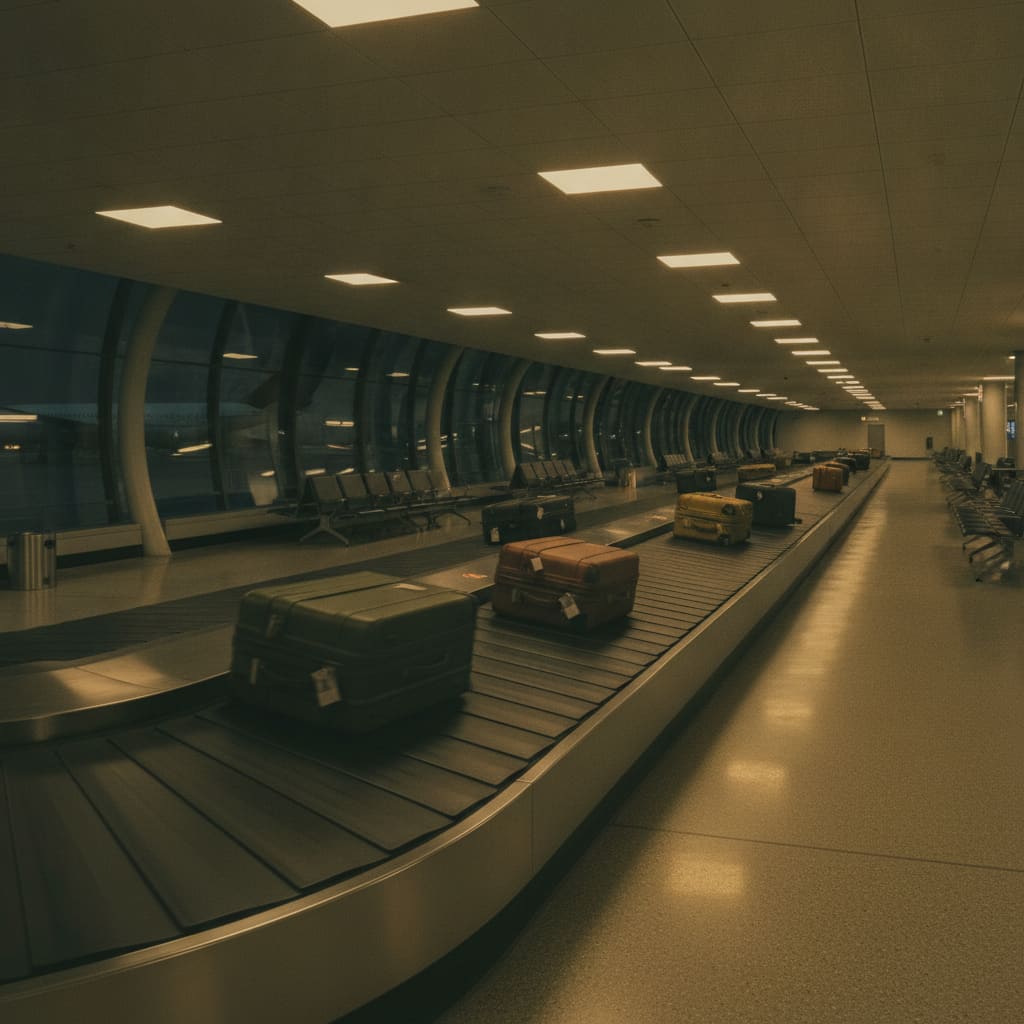
The carousel keeps turning. One by one, bags belonging to the people who flew in with you disappear, and familiar faces peel off toward the exit. But your bag never comes. What's left on the belt is an abandoned cart and a thinning crowd. The first thought is usually the worst one — that it's gone, lost somewhere, forever.
In reality, that is rarely what's happening. Complete loss is statistically uncommon. Most of the time a bag isn't on the belt because it's delayed — a tight connection meant the bag couldn't be transferred in time, it was misrouted onto another flight during ground handling, or it simply hasn't arrived yet. The problem is that in that moment, there's no way to know which one it is.
The baggage claim area has a strange kind of quiet. The low hum of the belt motor, the scrape of wheels on the floor, a distant announcement. People peel away one by one with their bags, and those left behind exchange glances — the same expression on every face, uncertain but not yet angry. Someone rechecks the monitor by the belt. Someone else opens and closes the airline's app on their phone.
Then comes the decisive moment: the door leading to the customs gate. Before and after that door are two entirely different situations. Cross it, and you become a traveler who has completed entry — and filing a baggage report suddenly becomes a far more cumbersome process. Surprisingly many people don't realize this and simply walk through, planning to sort it out later.
Why does this happen. The answer lies in the fact that bags and people travel through completely separate systems. While a passenger walks to the gate, checked luggage moves through carts, conveyors, and trucks before being loaded into the aircraft's cargo hold. This becomes far more complicated during a connection — if the time allowed to transfer from one flight to the next is short, a passenger can still make the gate change, but the ground crew handling hundreds of bags may not manage to move every one of them in time. In that case the bag goes on the next flight, or the one after. Misloading happens for a similar reason — when destinations or departure times overlap, a scanning error or manual handling mistake can send a bag onto the wrong aircraft entirely.
The reason the reporting process differs before and after customs is also structural. The pre-customs area is still within the airline's and airport's operational reach, and the baggage service desk located there has real-time access to the airline's tracking system. Once you leave that area, however, the report has to go through a phone line or online form, and connecting with an actual case handler and explaining the situation takes considerably more time and steps. In other words, those few minutes still inside the airport are the fastest, most direct access you'll ever have to the system — and that window doesn't reopen.
So once you're certain your bag isn't coming out, here is what to do before you leave the airport.
- Check your baggage tag receipt first. The sticker attached alongside your boarding pass carries the unique number needed to trace your bag, so never discard it — bring it straight to the desk.
- Before passing through the customs gate, find the airline's or airport's baggage service desk. It's usually inside or right beside the baggage claim area, marked with a Baggage Service sign or the airline's logo.
- File a PIR (Property Irregularity Report). This document records your flight number, the bag's appearance, its contents, and a tracking number — the tracking number becomes the key to every follow-up inquiry, so photograph or note it down without fail.
- Leave a clear delivery address. Give the accommodation's name, exact address, expected checkout date, and a reachable phone number, and the airline will deliver the bag directly the moment it's found. If you plan to change accommodations, mention that too.
- If you had to buy toiletries, a change of clothes, or other essentials during the delay, keep every receipt. These may be reimbursed, though limits and procedures differ by airline, so follow the instructions given at the time you filed the report.
- If you've already passed through customs, don't panic — gather your tracking number and flight details and contact the airline's customer service or online report page. It takes longer, but the report can still be filed.
In the end, those few minutes at the carousel aren't the moment you confirm the worst — they're the moment that decides what happens over the next few days. With one report and one tracking number, a bag that seemed to have vanished usually turns up at the accommodation's door within days. An empty belt isn't the end of the story.
Lost something in Korea?
We help travelers recover items left behind at hotels and other locations in Korea, and send them anywhere in the world.
Find my itemRead next
OCT 23, 2026 · Luggage
Incheon Airport Luggage Storage: Locations and Fees Vary by Source, Check Before You Go
OCT 14, 2026 · Luggage
How do you avoid grabbing the wrong suitcase at baggage claim?
OCT 5, 2026 · Luggage