TRAVEL NOTES / NO. 043
FRIDAY, SEPTEMBER 25, 2026
Luggage · 5 MIN READ162
They trusted the 55x40x20 rule — then had to repack at the gate
Carry-on size limits differ by airline, and budget carriers are often far stricter. Here is why checking your specific airline's rules before departure actually matters.
By Find to Send Editorial
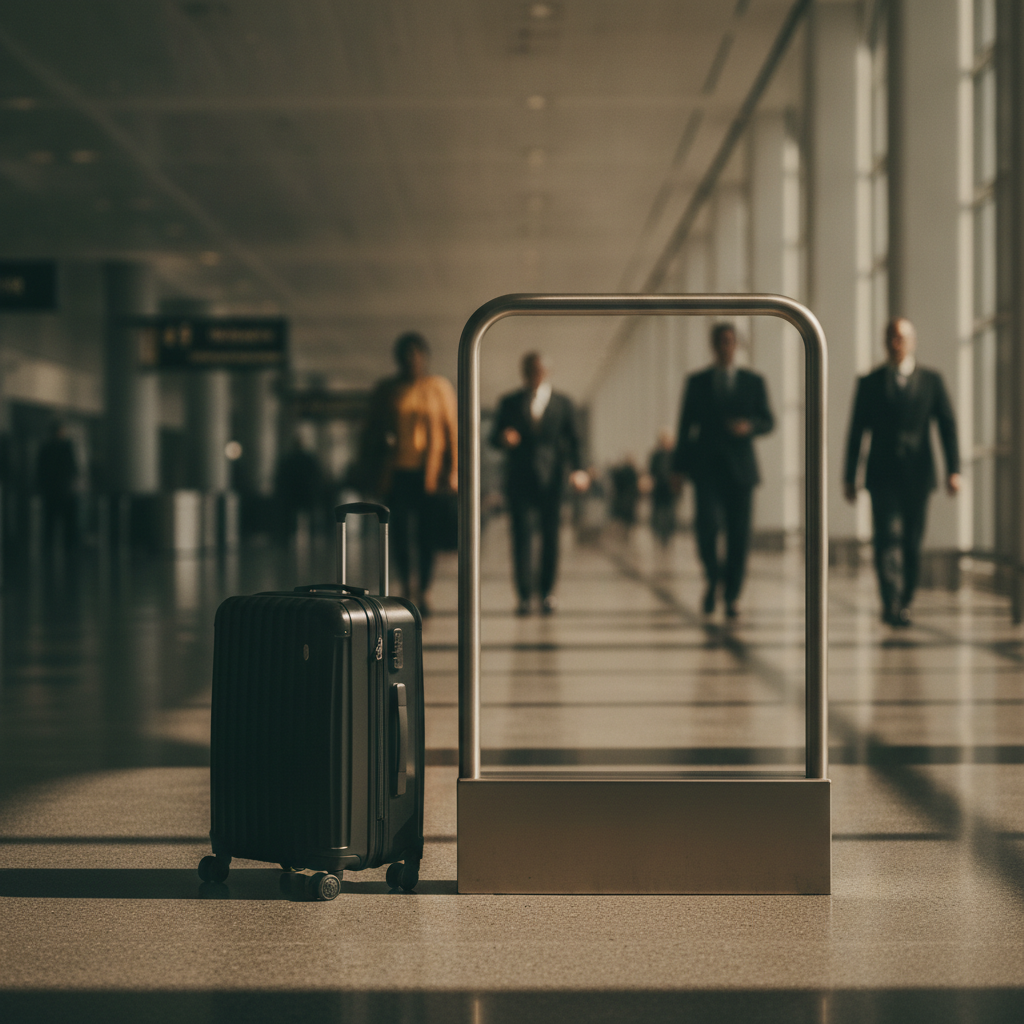
At Incheon Airport's departure hall, a long line has formed at a budget airline's check-in counter. One passenger confidently pushes a carry-on into the sizing frame beside the desk. She had matched it to the 55x40x20cm rule she'd seen online the night before. The staff member shakes his head. This airline measures each dimension separately rather than the sum of three sides, and the upper limit isn't 20cm but 18. A flicker of confusion crosses her face. She was sure that number was an international standard. Why is this airline different.
This scene isn't confined to one airport or one airline. It repeats daily, at gates around the world, as a common misunderstanding. The problem is that this misunderstanding rarely ends as a harmless mix-up.
Beside the counter sits a silver metal sizing frame. Passengers are told to slide their bags in, and if it doesn't fit, to check it in on the spot. The line behind grows longer, and the weight of other travelers' glances presses on the back of the neck. There are only two options, decided right there: reopen the case and repack, or pay the fee and check it. Some glance at their watches, calculating how much time is left before boarding; others pull out a card with a resigned expression, accepting the extra charge.
The real problem travelers face isn't simply exceeding a size limit — it's a mismatch in information. Online forums, travel blogs, and even some travel agency guides often present 55x40x20cm as if it were a fixed international standard. In reality, this figure is closer to a guideline recommended by the International Air Transport Association (IATA), not a binding rule every airline must follow. Full-service national carriers often stay close to this guideline, but budget airlines — which cut costs by reducing seat pitch and minimizing storage space — frequently set smaller dimensions or stricter separate weight limits of their own.
What makes this especially unsettling is that there is almost no chance to notice the difference before departure. Packing at home, the bag looks fine by eye; weighing it against yesterday's remembered number, it seems within limits. Only at the airport counter — often after already waiting in line for ten or fifteen minutes — does the traveler learn the rule is different. There's no time to go back, and no real space to repack, which is exactly what makes this moment so difficult.
This pattern repeats because of how airline business structures actually work. Budget carriers are built around keeping the base fare as low as possible, then recovering revenue through paid extras — seat selection, checked baggage, in-flight meals. Strict enforcement of carry-on limits isn't just about order at the gate; it directly connects to a revenue model where passengers whose bags don't qualify for the cabin end up paying a checked-baggage fee on the spot. Smaller aircraft also mean more limited overhead bin space, giving airlines a real incentive to measure strictly in order to avoid boarding delays and keep bin space evenly distributed. Full-service national carriers, by contrast, tend to operate larger aircraft and maintain a premium brand image, so their rules often stay closer to the more generous international guideline. In other words, even on the same type of international route, the airline's underlying business model is what actually shapes the rule.
So what should a traveler actually do.
- Right after booking — and no later than before you start packing — search the airline's official website for its carry-on baggage policy, using the airline's name together with terms like carry-on baggage size to find the specific page.
- Check the weight limit as carefully as the size limit. Some budget airlines allow generous dimensions but restrict weight to as little as 7 to 10kg, a limit that a few clothing items and a laptop can easily exceed.
- If you're flying a connecting or codeshare route, check the rules for the airline actually operating each specific leg. A ticket booked under Airline A but operated by Airline B usually follows Airline B's baggage rules, not the one you booked with.
- If you're buying a new carry-on, choose it based on the actual upper limit set by the airline you fly most often, rather than a generic international size printed by the bag's manufacturer. If you regularly fly multiple airlines, size to the strictest one among them.
- If your bag is flagged as oversized at the airport anyway, stay calm and weigh two options: paying the fee to check it on the spot, or quickly repacking some items into a smaller personal bag to bring onboard. The second option makes sense if you have time; the first is more realistic when boarding is imminent.
What that passenger faced at the counter wasn't really a problem with her suitcase — it was a problem of information. The number she'd seen the night before simply didn't apply to the flight she was taking that day. Next time you choose a carry-on, or pack one, checking whether that number actually belongs to the airline you booked might be the one habit that keeps you out of that line.
Hauling bags between stops?
You can send your luggage ahead — hotel to hotel, or between your hotel and the airport. We confirm the route and price with our partner first.
About Luggage ConnectionRead next
OCT 23, 2026 · Luggage
Incheon Airport Luggage Storage: Locations and Fees Vary by Source, Check Before You Go
OCT 14, 2026 · Luggage
How do you avoid grabbing the wrong suitcase at baggage claim?
OCT 5, 2026 · Luggage